
Italian · Main course · SAMPLE RECIPE
Chicken Marsala
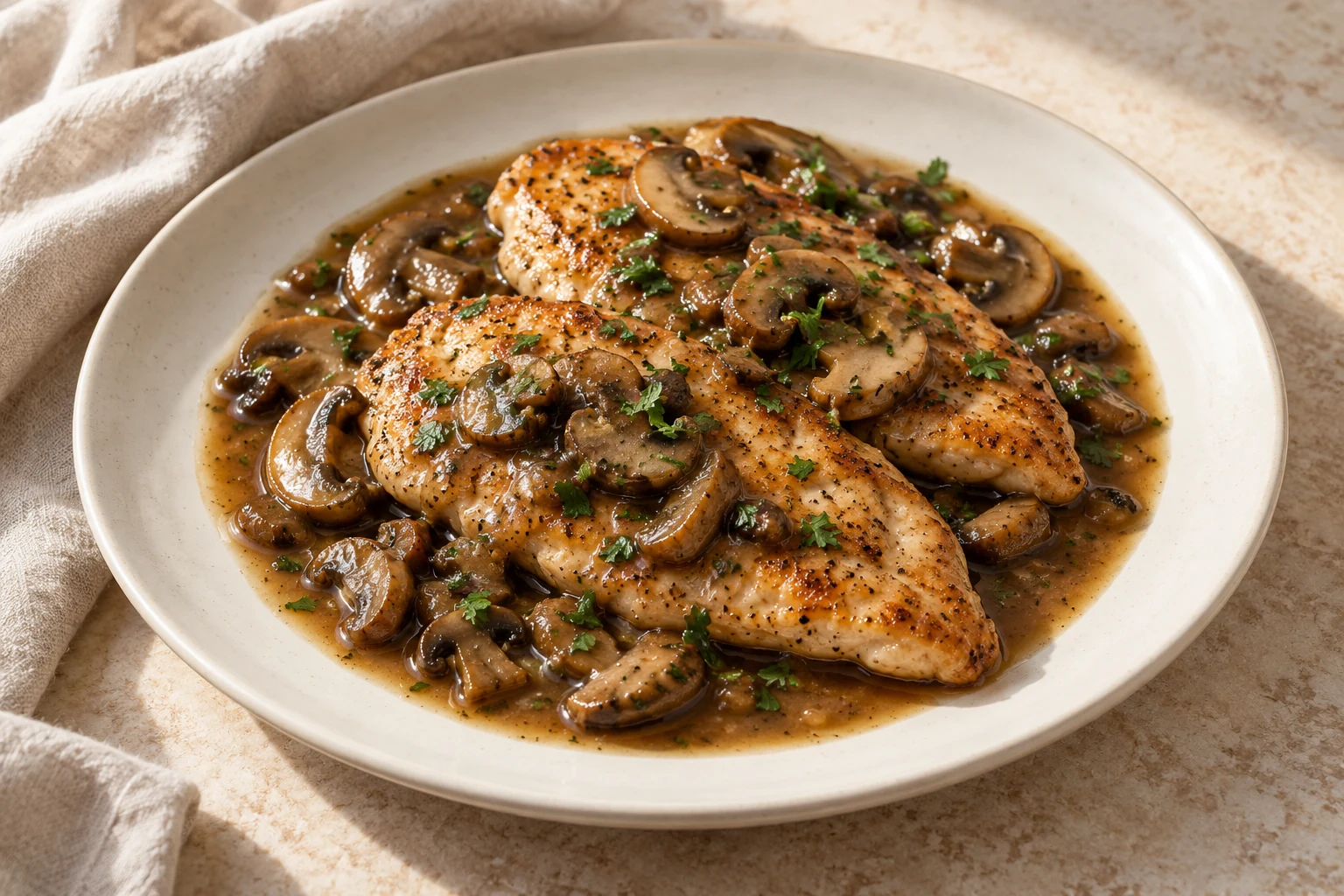
Golden chicken cutlets, browned mushrooms, and a glossy Marsala pan sauce make this Italian-American favorite feel like a dinner out, right at your own table.
Save to your Saucey Space, or keep a bookmark on this device.
A NOTE FROM THE KITCHEN
Brown the mushrooms. Give the sauce a moment.
Choose dry Marsala for a savory sauce with a little natural sweetness. This home version uses stock and a butter finish, without cream. Measure the wine before cooking and take the pan off the heat before adding it. Made with Marsala wine; cooking does not remove all the alcohol.
Ready to get started? The ingredients and steps are right below.
LET’S MAKE SOMETHING GOOD
Chicken Marsala
Sample recipe awaiting kitchen testing. Timings are estimates.
The good part
Check off each step as you cook.
0 of 5 steps complete
BEHIND THE DISH · Italian-American kitchens · Marsala, Sicily
Chicken MarsalaBeyond the plate.
Chicken Marsala connects a familiar Italian-American restaurant plate with a much older Sicilian wine trade. Its story includes thin-cut meat cookery, skilled cellar work, and the way a special meal can become a lasting family memory.
ORIGINS & EVOLUTION
A wine name, a family of dishes
Chicken and veal Marsala belong to the wider world of scaloppine: thin pieces of meat cooked quickly and served with a pan sauce. Both became familiar Italian-American restaurant offerings. The precise inventor and first date of the chicken preparation are not securely established.
The wine has a clearer commercial history. English merchant John Woodhouse shipped fortified Sicilian wine to Britain in 1773. That trade helped establish the international reputation of Marsala, named for its coastal city. It does not, by itself, date the chicken dish.
CULTURAL IMPACT
The taste of going out
A Chicago diner’s recollection of the Como Inn offers one vivid example. In his childhood during the 1950s and 1960s, restaurant meals were special occasions. Chicken Marsala became his favorite there, associated with a dining room that seemed luxurious to a child.
Long after the restaurant closed in 2001, that dish remained a source of comfort in his memory. His account suggests how restaurant food can become personal heritage: atmosphere, family company and a repeated order matter alongside the ingredients on the plate.
SOCIAL HISTORY
The workers behind the wine
Marsala’s trade depended on more than famous merchants. Woodhouse’s wine works employed specialist barrel makers and workers who clarified and fortified wine. Vincenzo Florio founded his own cellars in 1833, adding another major enterprise to the city’s developing wine industry.
Seen through that history, a spoonful of sauce connects a home cook to agricultural production, cellar skills and overseas commerce. This is one way to understand the dish’s layered identity: Sicilian wine, Italian cutlet traditions, and an especially strong place in American restaurant memory.
What else sounds good?
There’s a little more inspiration in the kitchen.
Back to the recipes