
Japanese · Main course · SAMPLE RECIPE
Chicken katsu
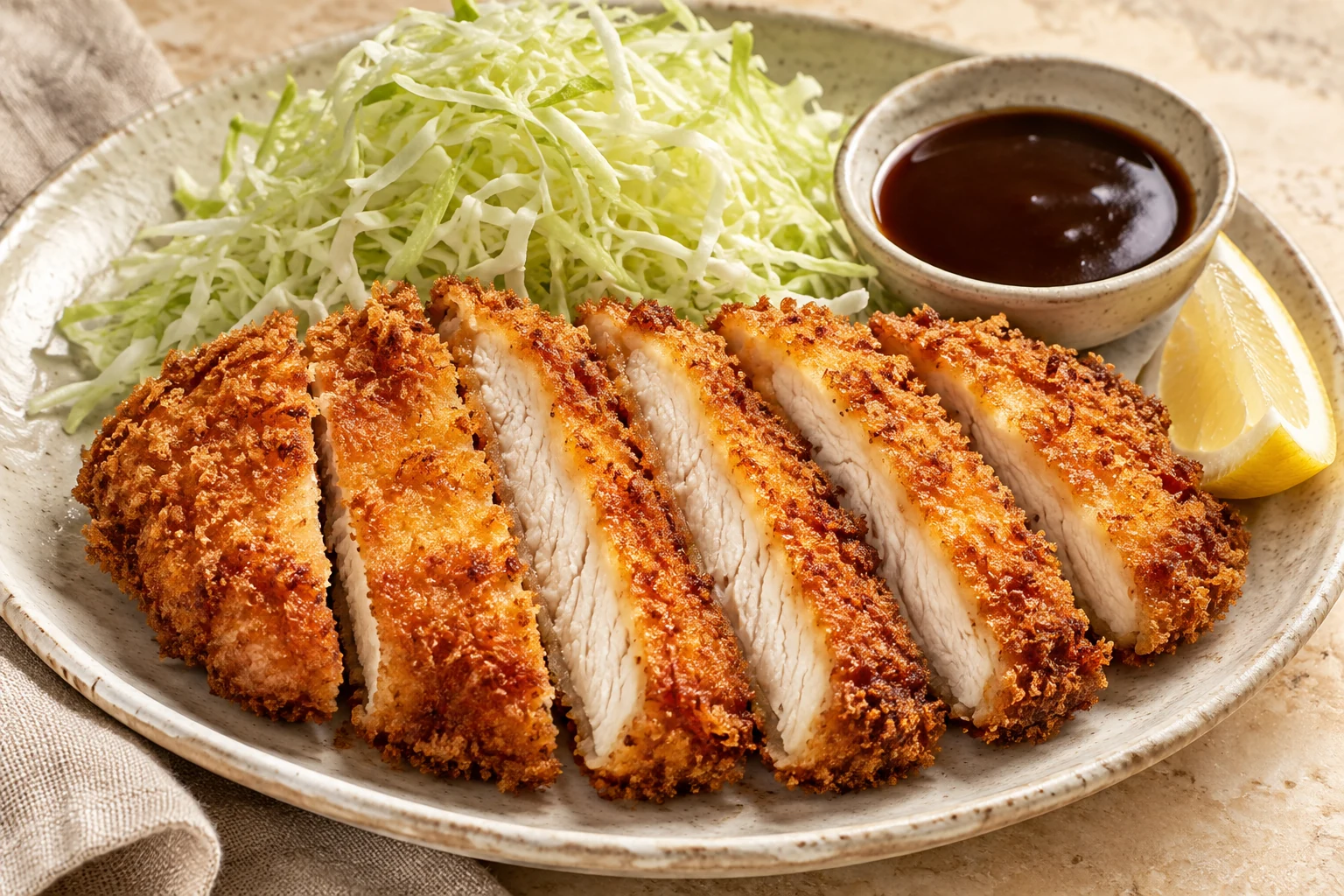
Japan’s crisp chicken cutlet, with a light panko crust and a tangy sauce for dipping. Shredded cabbage adds a fresh crunch alongside.
Save to your Saucey Space, or keep a bookmark on this device.
A NOTE FROM THE KITCHEN
Even thickness, even cooking.
Slice large chicken breasts horizontally to make cutlets, then gently pound any thick spots. A thin, even layer cooks through while the panko turns golden. Work in batches so the oil stays hot enough to crisp the coating.
Ready to get started? The ingredients and steps are right below.
LET’S MAKE SOMETHING GOOD
Chicken katsu
Sample recipe awaiting kitchen testing. Timings are estimates.
The good part
Check off each step as you cook.
0 of 4 steps complete
BEHIND THE DISH · Japan
Chicken katsuBeyond the plate.
Chicken katsu tells a story of borrowed ideas becoming familiar food. A European-style cutlet became part of Japanese cooking through new ingredients, restaurant techniques, and everyday ways of eating with rice, cabbage, and sauce.
ORIGINS & EVOLUTION
A cutlet becomes part of yōshoku.
Katsu belongs to yōshoku, the Japanese tradition of adapting Western dishes. After Japan reopened to wider Western contact in the nineteenth century, restaurants developed new meat dishes for local customers. Breaded pork cutlets, or tonkatsu, became one especially enduring result of that exchange.
Chicken katsu extends the cutlet idea to poultry: meat is coated with flour, egg, and panko, then fried. Its history is best understood within this broader family rather than attached to a confidently named chicken-katsu inventor. The familiar chicken preparation developed from the established pork-cutlet tradition.
CULTURAL IMPACT
An imported idea finds several homes.
The cutlet became adaptable enough to fit different meals. It can sit beside rice, accompany Japanese curry, or form the filling of a katsu sandwich. These are distinct presentations, each giving the crisp coating and tender meat a different setting.
This is part of yōshoku’s wider significance. Foods with foreign connections came to feel familiar within Japanese daily life. Chicken katsu illustrates that process especially clearly: the basic cutlet remains recognizable, while panko, the accompaniments, and sweet-tangy sauce give the meal its particular character.
SOCIAL HISTORY
From restaurant cooking to the lunch box.
Chicken katsu has a place in home meals, diners, and packed lunches. It is food that can move between commercial and domestic kitchens, rather than belonging only to formal restaurant service. Slicing the cooked cutlet into manageable strips also makes it straightforward to eat with chopsticks.
Our version follows that practical spirit with evenly thinned chicken, a shallow layer of frying oil, shredded cabbage, and bottled tonkatsu sauce. Rice can be added separately. The kitchen work lies in preparing an even cutlet and maintaining the coating’s crispness, familiar skills that cooks can pass on through making dinner together.
What else sounds good?
There’s a little more inspiration in the kitchen.
Back to the recipes