
Mexican · Main course · SAMPLE RECIPE
Chicken fajitas
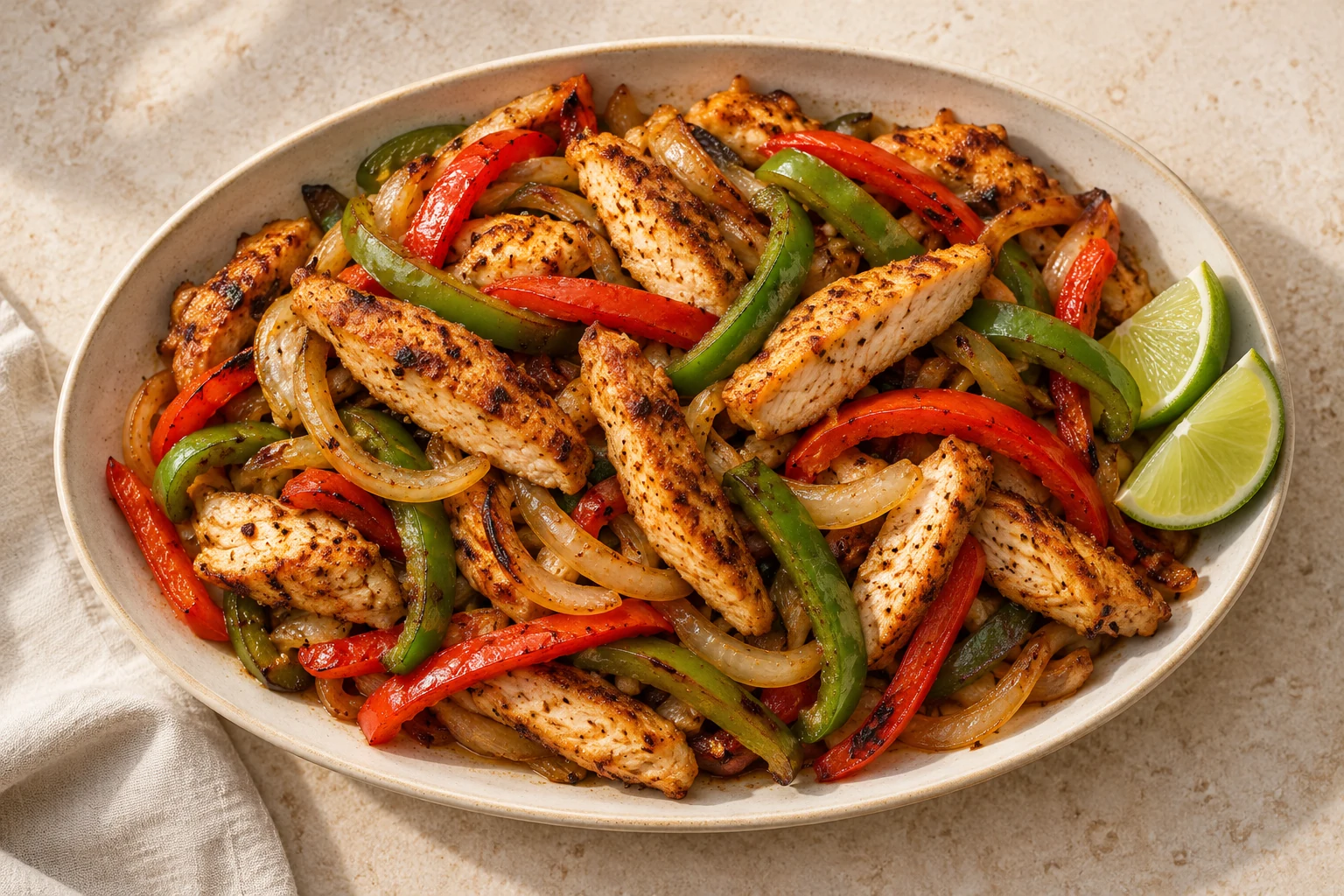
Lime-seasoned chicken, colorful peppers, and sweet onion tucked into warm tortillas for a lively skillet supper.
Save to your Saucey Space, or keep a bookmark on this device.
A NOTE FROM THE KITCHEN
Make space in the skillet.
These chicken fajitas follow a familiar Tex-Mex home style. Cooking the chicken and vegetables separately gives both a chance to brown instead of steaming in a crowded pan. The lime seasoning needs only the time it takes to slice the vegetables.
Ready to get started? The ingredients and steps are right below.
LET’S MAKE SOMETHING GOOD
Chicken fajitas
Sample recipe awaiting kitchen testing. Timings are estimates.
The good part
Check off each step as you cook.
0 of 4 steps complete
BEHIND THE DISH · South Texas, northeastern Mexico & Tex-Mex kitchens
Chicken fajitasBeyond the plate.
Chicken fajitas inherit a name that originally belonged to beef. Their story moves from border-region grilling traditions to family restaurants and the inviting ritual of filling a warm tortilla at the table.
ORIGINS & EVOLUTION
First a cut of meat, then a dinner format.
Fajita comes from faja, the Spanish word for a belt, referring to the long shape of skirt steak. Grilling that cut belongs to the food traditions of South Texas and northeastern Mexico. Chicken is a later extension of the familiar meal rather than its original defining meat.
There is no need to assign the entire tradition to one restaurant. Selling grilled beef in tortillas helped several Texas cooks and businesses reach new customers. The growth of restaurant fajitas eventually widened the name to include chicken, shrimp, and other fillings.
CULTURAL IMPACT
Houston gives the meal a wider audience.
Ninfa Laurenzo’s Houston restaurant became an influential part of that expansion. In 1973, she began serving grilled skirt steak in handmade flour tortillas from the family’s tortilla business. The meal was known there as tacos al carbón, connecting the restaurant’s success to an existing grilling tradition.
The restaurant experience helped turn fajitas into a recognizable Tex-Mex occasion. Warm tortillas and separately served fillings invite diners to assemble each bite themselves. That flexibility also helps explain why a chicken version can feel familiar even though it differs from the beef preparation behind the name.
SOCIAL HISTORY
A family business changes direction.
Laurenzo’s food business supported her family and became a place where hospitality mattered as much as the grill. Her children worked in the restaurant, and her daughter later recalled showing unfamiliar customers how to put the meat into tortillas. Eating together could involve learning a new way to eat.
Our skillet supper brings that participatory format into a home kitchen. Chicken, peppers, and onion cook in separate batches before meeting at the table with tortillas. It uses lime and pantry spices, without claiming to recreate a border cookout or the exact food of a particular restaurant.
What else sounds good?
There’s a little more inspiration in the kitchen.
Back to the recipes