
Italian · Main course · SAMPLE RECIPE
Chicken cacciatore
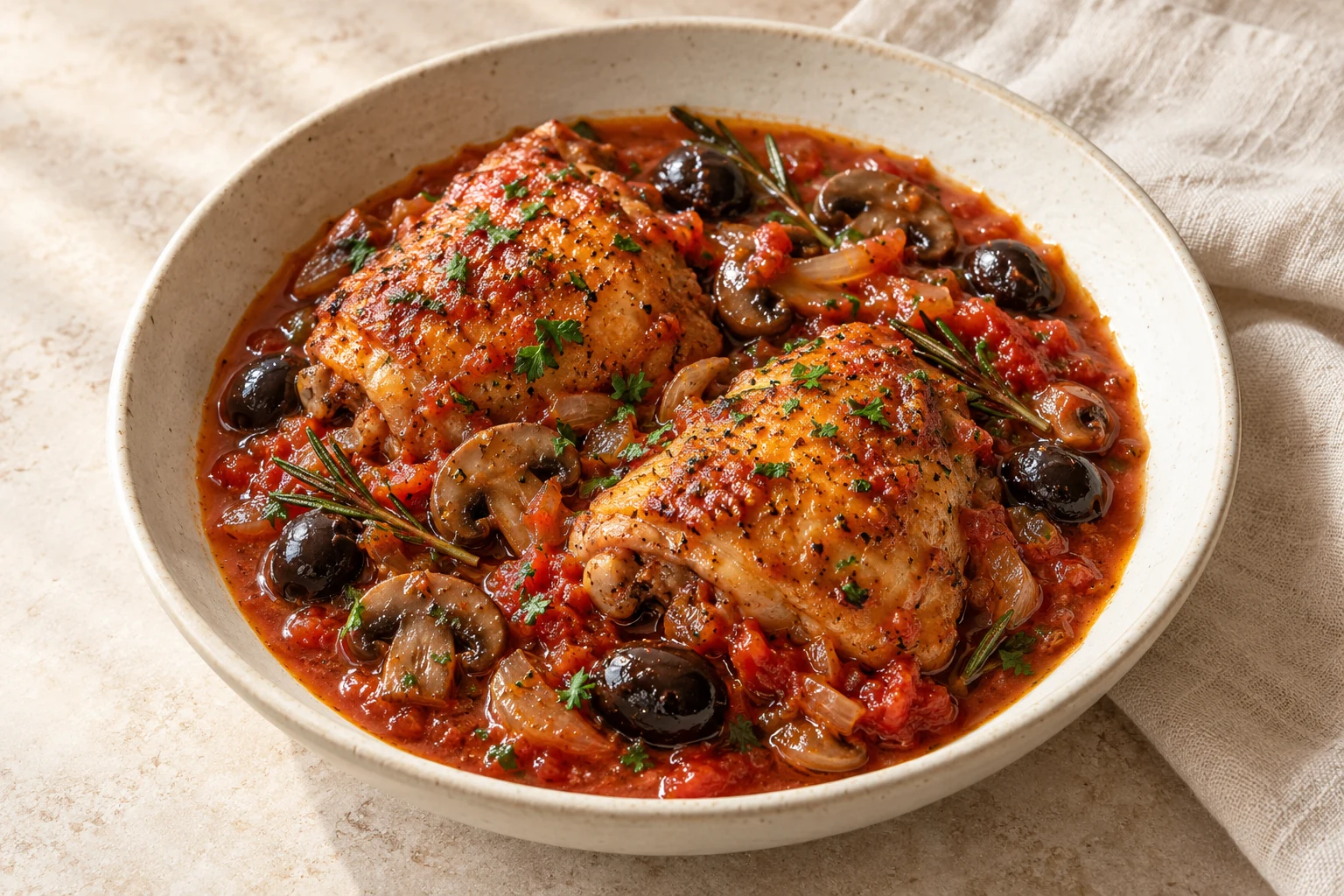
Golden chicken thighs simmer with tomatoes, mushrooms, black olives and rosemary in this generous, savory braise.
Save to your Saucey Space, or keep a bookmark on this device.
A NOTE FROM THE KITCHEN
A gentle simmer does the work.
Cacciatora preparations vary across Italy. This tomato-based home version includes mushrooms and black olives and uses chicken stock in place of wine. Keep the sauce at a quiet simmer so the thighs become tender without the liquid boiling away.
Ready to get started? The ingredients and steps are right below.
LET’S MAKE SOMETHING GOOD
Chicken cacciatore
Sample recipe awaiting kitchen testing. Timings are estimates.
The good part
Check off each step as you cook.
0 of 4 steps complete
BEHIND THE DISH · Italy · regional cacciatora traditions
Chicken cacciatoreBeyond the plate.
Chicken cacciatore belongs to a family of Italian braises whose familiar name travels more neatly than any single recipe. Herbs, acidity and a good pan sauce connect many versions.
ORIGINS & EVOLUTION
A name shared across regions
Alla cacciatora means hunter-style, but the name does not establish one inventor or birthplace. Tuscany, Emilia-Romagna, Umbria and other regions have their own preparations. Treating all of them as one fixed tomato-and-pepper formula misses much of that variety.
Some versions include tomatoes; others remain pale, using wine or vinegar with herbs. A Roman preparation may include anchovy. Rosemary, garlic, olives and mushrooms appear in different combinations, making the dish a flexible cooking tradition rather than a single ingredient checklist.
CULTURAL IMPACT
A family braise becomes a city dish
Chef Stefano Callegari has described the cacciatora at his Roman restaurant Romanè through memories of his family. The same family preparation also informed the chicken filling for Trapizzino, turning a sit-down braise into food served inside a bread pocket.
Romanè selected its chicken for the Buon Ricordo restaurant-plate tradition. Established in 1964, that association links regional dishes with decorated ceramic souvenirs. A meal can therefore become both an expression of local identity and something a diner remembers through an object.
SOCIAL HISTORY
Recipes carried through households
Italian-American cook Erica De Mane recalls her mother making a tomato, red-wine and red-pepper cacciatore. Her own later versions changed the herbs and vegetables. That personal account offers a concrete example of family continuity that also leaves room for disagreement and revision.
These examples show different kinds of recipe transmission: a parent teaching a flavor, a restaurant presenting family cooking, and a street-food business changing its format. None requires an unchanged ancestral formula. Our stock-based tomato braise adds another clearly identified home adaptation.
What else sounds good?
There’s a little more inspiration in the kitchen.
Back to the recipes