
Filipino · Main course · SAMPLE RECIPE
Filipino chicken adobo
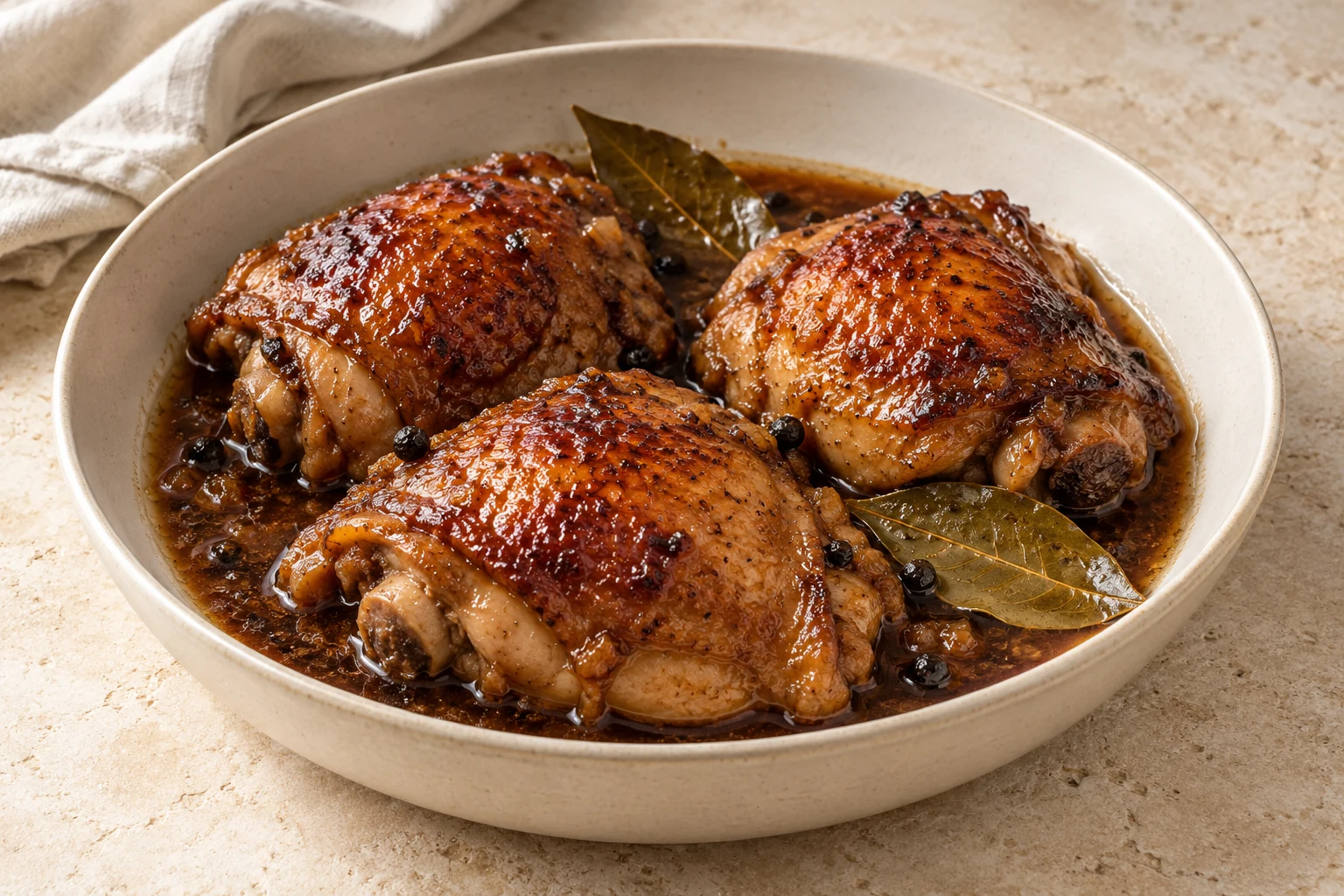
Tender chicken thighs braised with soy sauce, vinegar, garlic, and bay, then coated in their deeply savory pan sauce.
Save to your Saucey Space, or keep a bookmark on this device.
A NOTE FROM THE KITCHEN
Let vinegar and soy find their balance.
Adobo takes many forms across Filipino kitchens. This home version uses bone-in chicken thighs, soy sauce, vinegar, garlic, bay leaves, and peppercorns. A little sugar is optional; the finished sauce should still be distinctly tangy and savory.
Ready to get started? The ingredients and steps are right below.
LET’S MAKE SOMETHING GOOD
Filipino chicken adobo
Sample recipe awaiting kitchen testing. Timings are estimates.
The good part
Check off each step as you cook.
0 of 4 steps complete
BEHIND THE DISH · The Philippines
Filipino chicken adoboBeyond the plate.
Adobo can taste like home without tasting exactly the same in every home. Vinegar, savory seasoning, and patient cooking link a varied Filipino tradition whose name carries the traces of colonial encounter.
ORIGINS & EVOLUTION
A borrowed word, a distinctly Filipino practice.
The name adobo comes from Spanish cooking vocabulary, but the Filipino preparation has its own character. Historians have debated the relationship between indigenous vinegar cooking and Spanish or Mexican dishes. The shared word alone cannot establish that their recipes or histories are identical.
Filipino food scholarship treats adaptation as central to the story. Vinegar, garlic, pepper, and other seasonings were combined according to local tastes; soy sauce adds another strand of cultural exchange. It is more useful to understand that developing practice than to insist on a single, recoverable original chicken recipe.
CULTURAL IMPACT
A national symbol with room for difference.
Adobo’s importance became especially visible when a Philippine government committee began discussing a cooking standard in 2021. Its announcement acknowledged preparations with coconut milk, annatto, soy sauce, and different cooking methods. Even an effort to identify common ground had to address variety.
That variety is part of the dish’s cultural meaning. A chicken-and-pork pot, a sharper vinegar-forward preparation, and a richer version with coconut can each express particular preferences. Regionality and personal taste are subjects of contemporary research on how adobo helps people describe Filipino identity.
SOCIAL HISTORY
Household choices become the tradition.
Home-cooking accounts show adobo adjusting to the people at the table. Some cooks choose chicken, some pork, and others combine them when feeding a larger group. The decision changes the sauce as well as the portioning: fatty pork and chicken contribute different textures to the same pot.
Rice provides a familiar companion to the concentrated sauce. Our recipe chooses bone-in chicken thighs, equal measures of soy sauce and vinegar, garlic, bay leaves, and peppercorns. Optional sugar and a final reduction are specific choices for this version, leaving room for other households to recognize a different balance as their own.
What else sounds good?
There’s a little more inspiration in the kitchen.
Back to the recipes