
Italian · Salad · SAMPLE RECIPE
Caprese salad
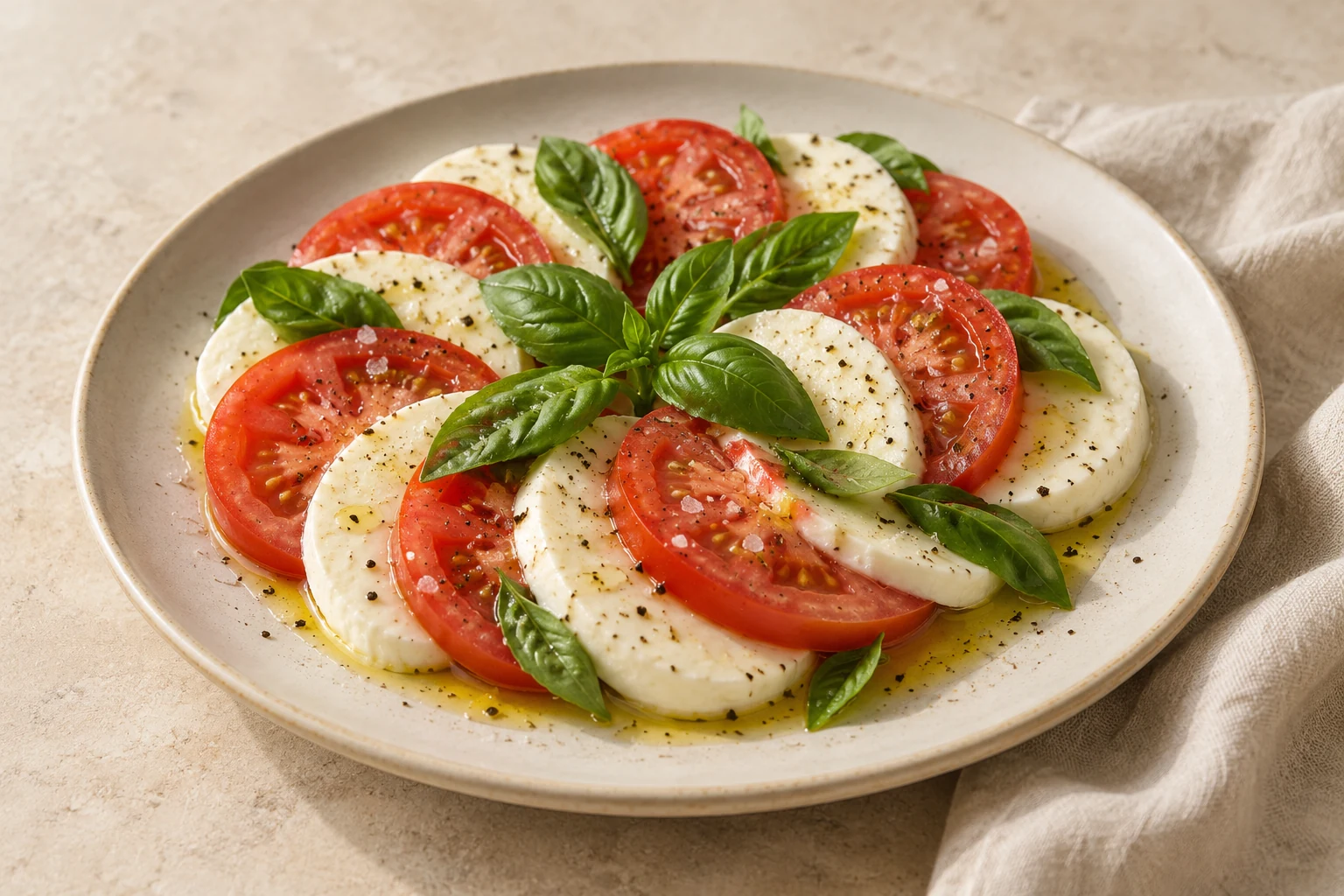
Ripe tomatoes, milky mozzarella and fragrant basil with a simple olive-oil dressing: a bright salad that lets good ingredients speak.
Save to your Saucey Space, or keep a bookmark on this device.
A NOTE FROM THE KITCHEN
Choose tomatoes you would eat on their own.
Sweet, ripe tomatoes are the center of this Capri-associated salad. Fresh cow’s-milk mozzarella or buffalo mozzarella both work here. This version keeps the dressing to olive oil, salt and pepper, with no balsamic glaze.
Ready to get started? The ingredients and steps are right below.
LET’S MAKE SOMETHING GOOD
Caprese salad
Sample recipe awaiting kitchen testing. Timings are estimates.
The good part
Check off each step as you cook.
0 of 4 steps complete
BEHIND THE DISH · Capri and the wider Campania region
Caprese saladBeyond the plate.
Caprese turns tomatoes, fresh cheese and basil into a recognizable image of summer. Its regional ingredients are easier to document than its often-repeated invention stories.
ORIGINS & EVOLUTION
An island association, an uncertain beginning
The salad is closely associated with Capri, off the Campanian coast. Accounts place its emergence in the twentieth century, but disagree about the circumstances. There is no need to choose a single dramatic moment to appreciate its connection with the surrounding region.
One story involves a patriotic builder assembling a red, white and green lunch; another connects the salad with a hotel dinner for the Futurist writer Marinetti. Even dates attached to the hotel story vary. These are competing traditions, not an agreed documentary history.
CULTURAL IMPACT
A regional plate with a national image
The colors immediately suggest the Italian flag, making the platter visually memorable before anyone takes a bite. That association helps explain the patriotic storytelling around it. A resemblance, however, cannot prove that someone deliberately invented the dish for that purpose.
The ingredients also express Campania more specifically. Sorrento tomatoes feature prominently in local descriptions, alongside basil and fresh mozzarella or fiordilatte. Our version lets cooks choose good ripe tomatoes and either fresh cheese, without claiming that one available tomato variety defines every caprese.
SOCIAL HISTORY
The work behind a simple salad
Fresh mozzarella has a commercial history much older than the salad. In nineteenth-century Aversa, a wholesale market organized prices for buffalo-milk cheeses, and contracts linked producers with distributors. The apparent simplicity of a platter rests on farming, dairy work and the movement of perishable food.
In the Sorrento peninsula, caprese appears on summer tables in homes as well as restaurants. Those settings connect an everyday meal with a dish visitors recognize. The same few ingredients can support informal household cooking and the region’s hospitality businesses.
What else sounds good?
There’s a little more inspiration in the kitchen.
Back to the recipes