
Italian · Main course · SAMPLE RECIPE
Bucatini all’amatriciana
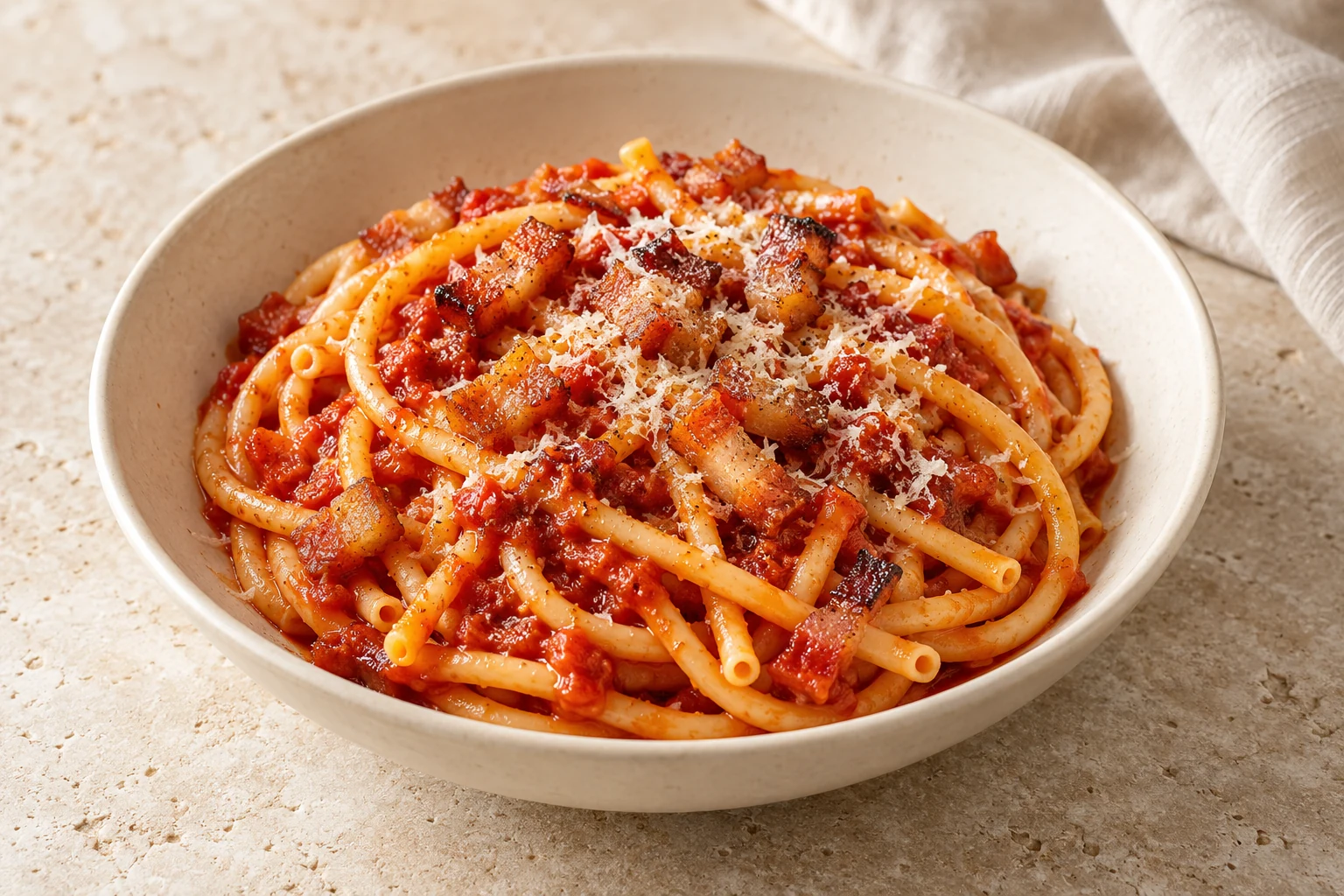
Hollow bucatini carry a lively tomato sauce with golden guanciale, a little chile, and a salty finish of Pecorino Romano.
Save to your Saucey Space, or keep a bookmark on this device.
A NOTE FROM THE KITCHEN
A dish from Amatrice, at home in Rome.
Guanciale is cured pork jowl; its rendered fat gives this sauce much of its flavor. This home version keeps the tomato, guanciale, and sheep’s-milk cheese at the center, with no onion and no wine.
Ready to get started? The ingredients and steps are right below.
LET’S MAKE SOMETHING GOOD
Bucatini all’amatriciana
Sample recipe awaiting kitchen testing. Timings are estimates.
The good part
Check off each step as you cook.
0 of 4 steps complete
BEHIND THE DISH · Amatrice and Rome, Lazio, Italy
Bucatini all’amatricianaBeyond the plate.
Amatriciana carries the name of a mountain town into Roman dining rooms and kitchens far beyond Italy. Its history includes preserved pork, migration for work, and an unusually direct connection between a familiar meal and public solidarity.
ORIGINS & EVOLUTION
A mountain tradition gains tomato.
Regional accounts connect the sauce to Amatrice and the surrounding pastoral landscape, where cured pork and cheese were practical provisions. Tomato distinguishes the red sauce from the related preparation known as gricia. The exact moment of that transformation is less certain than tidy invention stories suggest.
Guanciale, tomato, and sheep’s-milk cheese remain its defining combination. Pasta shape varies: spaghetti and short shapes also belong to the tradition. We use hollow bucatini, with a little chile, and omit wine in this home preparation.
CULTURAL IMPACT
Two places share one celebrated plate.
Rome adopted amatriciana into its familiar family of pasta dishes alongside cacio e pepe, gricia, and carbonara. That prominence can obscure the town in its name. Keeping Amatrice visible acknowledges the regional contribution within what diners now recognize as Roman cuisine.
In 2020, Amatriciana Tradizionale entered the European Union’s register of Traditional Specialities Guaranteed. The recognition gives a defined traditional preparation a formal identity. It also illustrates how cooks’ inherited practices can become subjects of public documentation and preservation.
SOCIAL HISTORY
From earning a living to offering help.
People from the Amatrice area helped carry the dish to Rome through work in inns, restaurants, and food retail. Its urban story is therefore also a migration story: people built livelihoods while taking familiar ingredients and skills into a larger city.
After the August 2016 earthquake, an international campaign invited restaurants to serve amatriciana and donate two euros per plate, shared between restaurant and customer. The appeal used an already familiar dish to direct attention and support toward the community whose name it bears.
What else sounds good?
There’s a little more inspiration in the kitchen.
Back to the recipes