
American · Breakfast · SAMPLE RECIPE
Everyday blueberry muffins
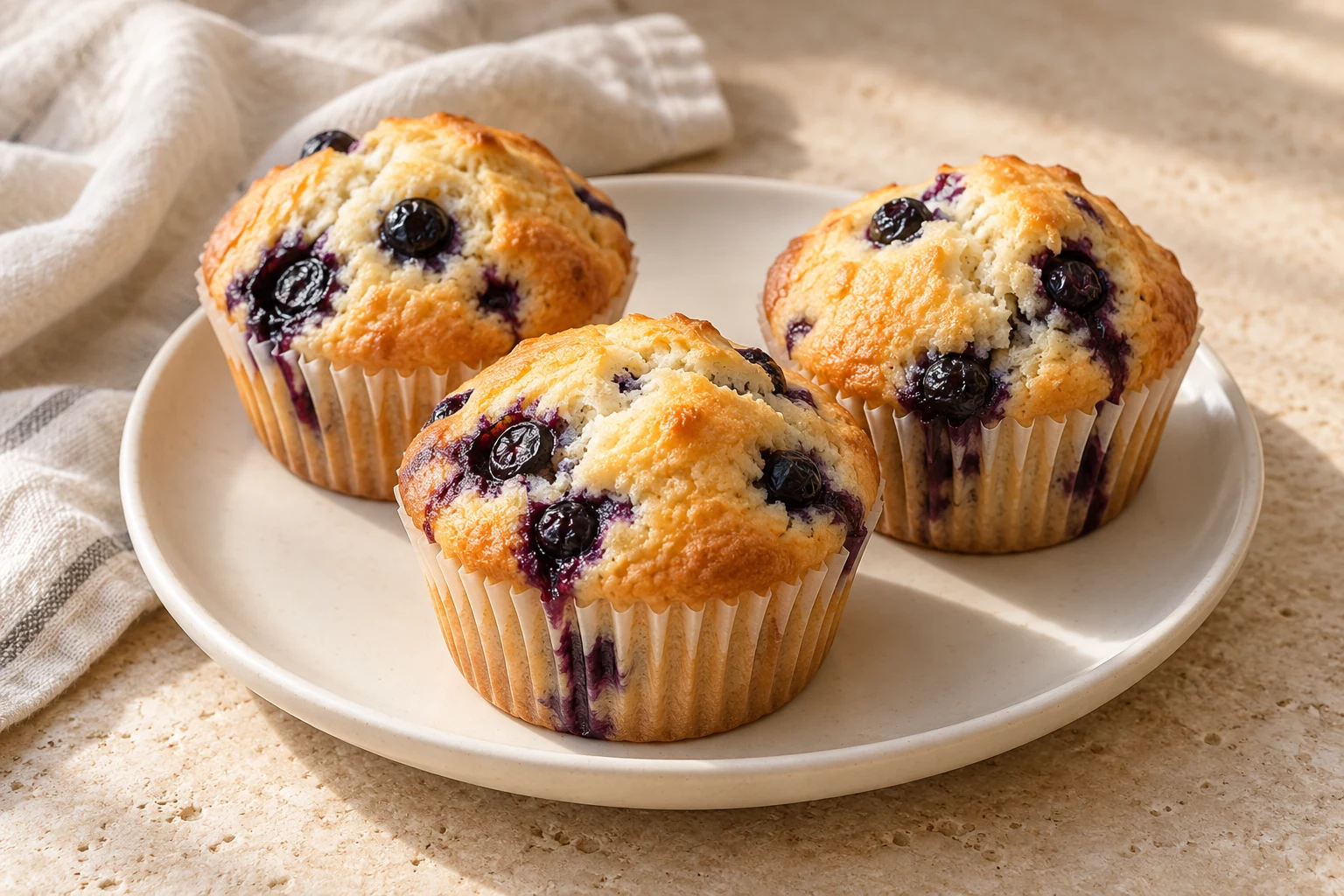
Soft vanilla muffins filled with juicy blueberries, with a simple golden top and no extra crumble to make before breakfast.
Save to your Saucey Space, or keep a bookmark on this device.
A NOTE FROM THE KITCHEN
Fold gently once the flour goes in.
Yogurt adds a little tang and helps keep the crumb soft. These are straightforward, lightly sweet muffins with whole blueberries and a plain top. The recipe makes 12 standard muffins; one muffin is one serving.
Ready to get started? The ingredients and steps are right below.
LET’S MAKE SOMETHING GOOD
Everyday blueberry muffins
Sample recipe awaiting kitchen testing. Timings are estimates.
The good part
Check off each step as you cook.
0 of 4 steps complete
BEHIND THE DISH · United States
Everyday blueberry muffinsBeyond the plate.
Blueberry muffins connect a familiar breakfast bake with the history of a North American fruit. Behind their blue pockets are woodland harvests, plant breeding, and a department-store dining room that made one version especially memorable.
ORIGINS & EVOLUTION
From gathered berries to cultivated crops.
Blueberries were gathered long before commercial growers supplied them. Indigenous people and later settlers knew the wild fruit. The history of the modern muffin therefore involves two separate developments: an established ingredient and the expansion of American quick-bread baking.
In New Jersey, grower Elizabeth White worked with botanist Frederick Coville to develop cultivated blueberries. Their first crop reached the market in 1916. That date marks a milestone in blueberry farming, not the invention of blueberry muffins, whose beginnings cannot be reduced to that partnership.
CULTURAL IMPACT
A department store leaves a baking memory.
Boston’s Jordan Marsh department store became known for generously filled blueberry muffins served in its top-floor dining room. The store disappeared in the 1990s, but the muffins continued to be recreated by home bakers. A retail experience acquired a life beyond the building itself.
The remembered version has a sugary crown and combines crushed berries with whole ones. Its survival offers a concrete example of food carrying the memory of a place: people can revisit a familiar taste long after the original counter has closed.
SOCIAL HISTORY
The local knowledge behind the crop.
The breeding story also includes people who knew the surrounding woods. White offered rewards for especially large wild berries, and promising bushes were identified through local gatherers. Several selected plants took their finders’ names, preserving a trace of their contribution to commercial horticulture.
The muffin brings that agricultural history into a small, portable bake. Nineteenth-century improvements in chemical leavening had already made quick baking more convenient; cultivated fruit expanded the ingredient’s commercial possibilities. Our everyday version uses whole fresh berries, milk, and yogurt, with a plain top.
What else sounds good?
There’s a little more inspiration in the kitchen.
Back to the recipes