
Moroccan · Main course · SAMPLE RECIPE
Bissara · smooth fava-bean soup
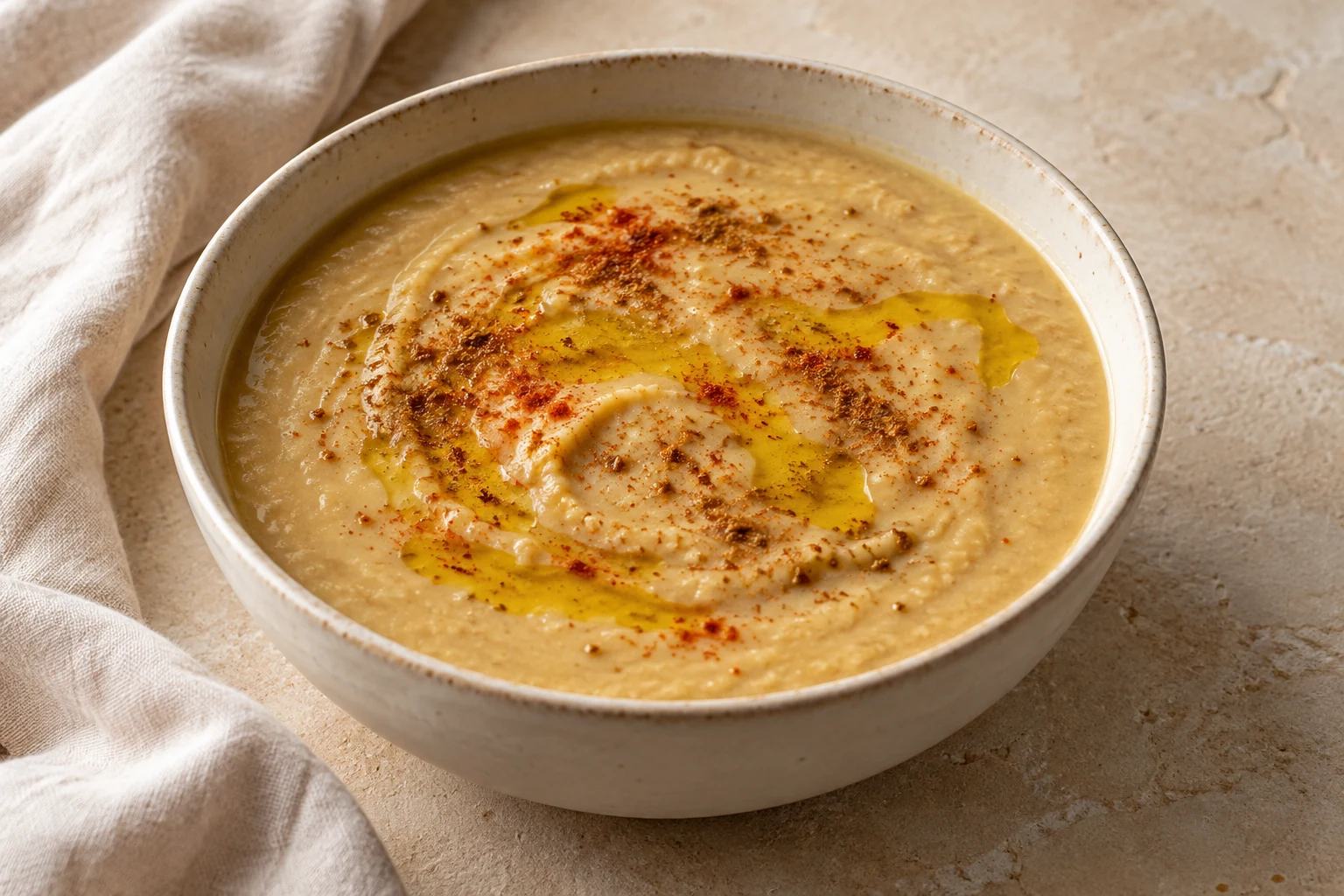
A warm, thick purée of dried fava beans and garlic, finished with olive oil, cumin, and paprika. Simple Moroccan comfort to eat by the spoonful.
Save to your Saucey Space, or keep a bookmark on this device.
A NOTE FROM THE KITCHEN
Start with peeled, split dried fava beans.
Look for pale dried split fava beans with the dark skins already removed. Whole skin-on beans or fresh broad beans are not interchangeable here. The overnight soaking time is included. Bread is an optional accompaniment, prepared separately.
Ready to get started? The ingredients and steps are right below.
LET’S MAKE SOMETHING GOOD
Bissara · smooth fava-bean soup
Sample recipe awaiting kitchen testing. Timings are estimates.
The good part
Check off each step as you cook.
0 of 4 steps complete
BEHIND THE DISH · Northern Moroccan bean traditions
Bissara · smooth fava-bean soupBeyond the plate.
A humble pot of dried beans becomes a smooth soup, lifted at the table by olive oil and spice.
ORIGINS & EVOLUTION
A purée with more than one consistency.
Moroccan bissara, also spelled bessara, can be made from dried peeled fava beans and served thick enough to dip or loose enough to eat as soup. A related split-pea version is also familiar; the two ingredients require different preparation.
CULTURAL CONTEXT
At home and from street-food pots.
Bissara is particularly associated with northern Morocco, while being enjoyed elsewhere in the country too. It can appear at breakfast or another meal, often with bread and a generous finish of olive oil and cumin.
AT THE TABLE
Soaked favas and a smooth finish.
Our beans soak overnight before simmering with garlic. An immersion blender gives the finished soup its smooth body. The final olive oil and spice are added to the bowls, so their fragrance remains noticeable above the mild bean base.
What else sounds good?
There’s a little more inspiration in the kitchen.
Back to the recipes