
French · Drinks · SAMPLE RECIPE
Bee’s Knees · gin, lemon & honey
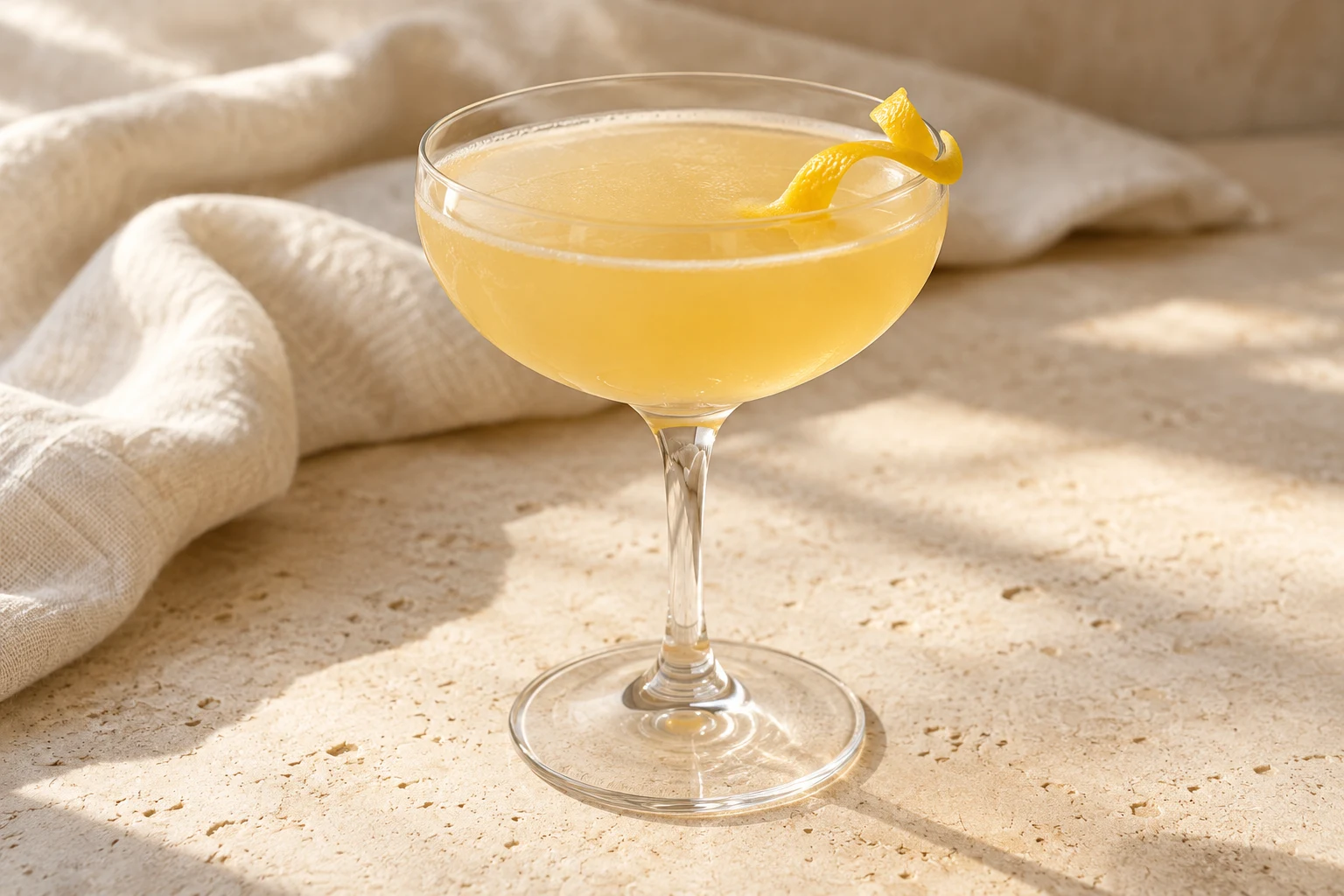
Honey softens fresh lemon and brings a floral depth to this shaken gin classic. A small lemon peel finishes the softly golden cocktail.
Save to your Saucey Space, or keep a bookmark on this device.
A NOTE FROM THE KITCHEN
The small honey-syrup preparation is included.
The measured honey and warm water make a two-to-one honey syrup by volume. Stir them together and cool before shaking; the ten-minute cooling allowance is included. The honey flavor will vary naturally with its floral source. The base batch makes two cocktails.
Ready to get started? The ingredients and steps are right below.
LET’S MAKE SOMETHING GOOD
Bee’s Knees · gin, lemon & honey
Sample recipe awaiting kitchen testing. Timings are estimates. Contains alcohol.
The good part
Check off each step as you cook.
0 of 4 steps complete
BEHIND THE DISH · Prohibition-era cocktails and Paris bar books
Bee’s Knees · gin, lemon & honeyBeyond the plate.
Honey gives a gin-and-lemon sour its own aroma and rounded sweetness, even with only three main flavors.
ORIGINS & EVOLUTION
A classic without a settled inventor.
The Bee’s Knees belongs to the cocktail world of the Prohibition era, but its first creator is not securely established. It appears in Frank Meier’s 1936 The Artistry of Mixing Drinks, linking its printed history with the Paris bar scene.
CULTURAL CONTEXT
Honey changes more than sweetness.
Replacing sugar syrup with honey adds flavor that varies with the flowers visited by the bees. Contemporary recipes retain that simple gin, lemon, and honey relationship while adjusting the balance. The name also echoes an old expression for something especially good.
AT THE TABLE
Make a small syrup before shaking.
We loosen measured honey with half its volume of warm water and allow ten minutes for cooling. The whole small batch then joins gin and fresh lemon in the shaker. A lemon peel is the only garnish.
What else sounds good?
There’s a little more inspiration in the kitchen.
Back to the recipes