
Japanese · Main course · SAMPLE RECIPE
Teriyaki steak & rice bowls
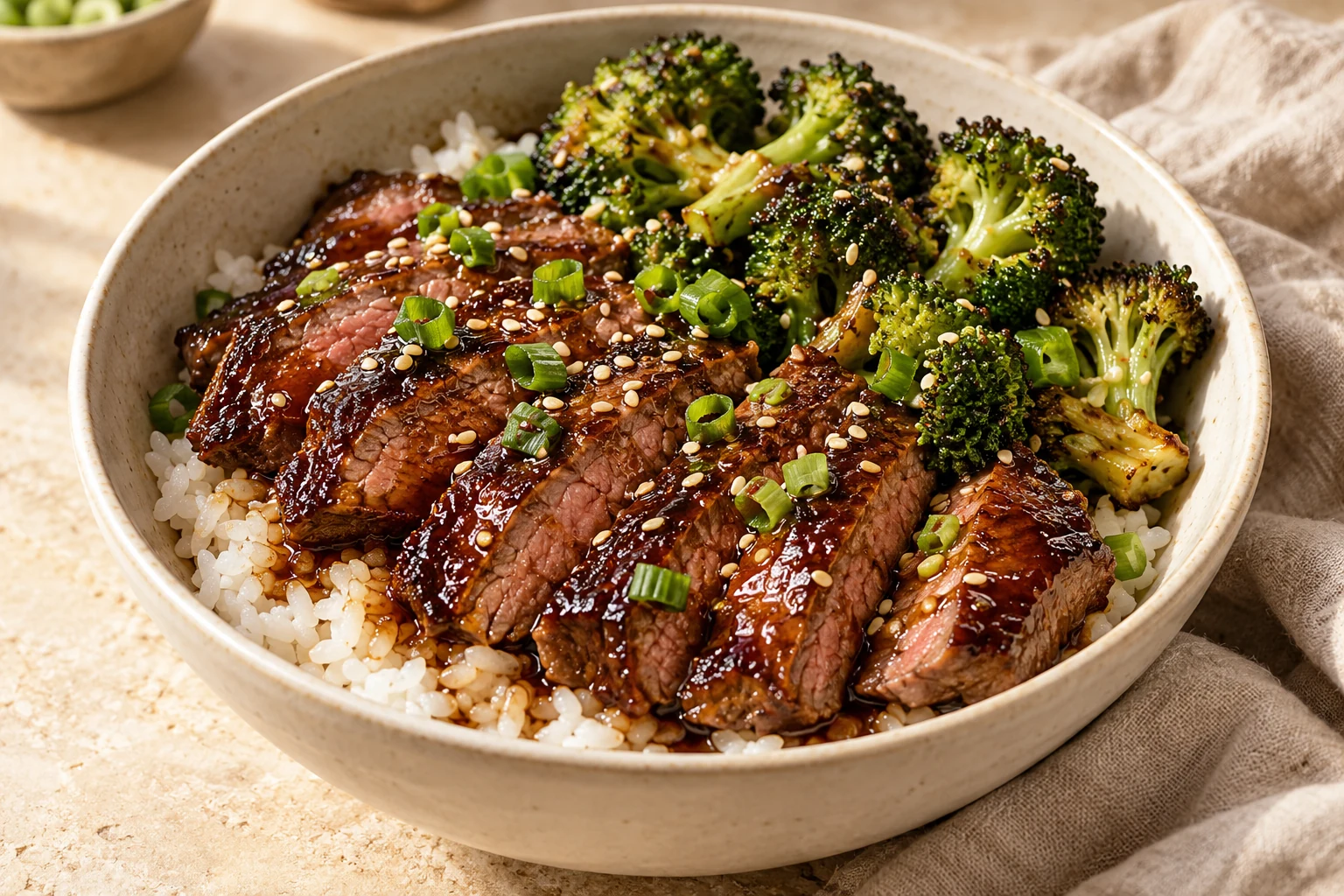
Seared steak, a glossy Japanese-style teriyaki glaze, and a bowl of warm rice. Broccoli adds a little green to an easy dinner.
Save to your Saucey Space, or keep a bookmark on this device.
A NOTE FROM THE KITCHEN
Make the glaze separately.
Teriyaki is a Japanese glazing technique. Here, soy sauce, mirin, sake, and sugar reduce into a glossy sauce while the steak cooks separately. This keeps the sugars from scorching during the sear and leaves you in control of the sauce.
Ready to get started? The ingredients and steps are right below.
LET’S MAKE SOMETHING GOOD
Teriyaki steak & rice bowls
Sample recipe awaiting kitchen testing. Timings are estimates.
The good part
Check off each step as you cook.
0 of 4 steps complete
BEHIND THE DISH · Japan · Transpacific adaptations
Teriyaki steak & rice bowlsBeyond the plate.
A glossy sauce and a bowl of rice make teriyaki steak an inviting home dinner. Behind that familiar combination lies a Japanese cooking technique that took on new forms through migration, food businesses, and the tastes of diners across the Pacific.
ORIGINS & EVOLUTION
The shine came before the bottle.
In Japan, teriyaki describes a cooking method: teri refers to gloss, while yaki covers grilling, broiling, or pan-frying. Fish and chicken are familiar choices, seasoned with soy sauce, sake, mirin, and sometimes sugar. The term means more than a name for a ready-made sauce.
By 1950, an American newspaper described Hawaiian beef teriyaki made from marinated, skewered meat. Bottled sauces helped carry the idea farther; Kikkoman began exporting a teriyaki barbecue marinade to North America in 1961. Beef bowls belong to this broader, evolving story of technique, seasoning, and serving format.
CULTURAL IMPACT
Seattle made it a neighborhood meal.
Seattle developed its own influential teriyaki culture. In 1976, Toshihiro Kasahara opened Toshi’s, serving chicken and beef with rice and salad. An enthusiastic local review helped the business grow. The dishes offered a substantial, inexpensive meal, and other small teriyaki businesses followed.
This regional restaurant style is one expression of teriyaki’s international life. Our steak-and-broccoli bowls are another home adaptation. They use a glaze of soy sauce, mirin, sake, sugar, and ginger, reduced separately from the meat, then spooned over the finished bowl.
SOCIAL HISTORY
Family businesses helped shape the flavor.
Korean immigrant restaurateurs became important participants in Seattle’s teriyaki businesses during the 1980s. The Chung family’s experience shows the connection with working life: their shops sold sandwiches and later rice plates to customers seeking a quick, affordable lunch near industrial workplaces.
The family also helped other Korean entrepreneurs learn the business through community connections. Such histories make teriyaki’s spread more tangible than a simple story of one cuisine becoming popular. The meal was shaped by people earning a living, sharing skills, and adjusting food to the customers around them.
What else sounds good?
There’s a little more inspiration in the kitchen.
Back to the recipes