
Russian · Main course · SAMPLE RECIPE
Steak & mushroom stroganoff
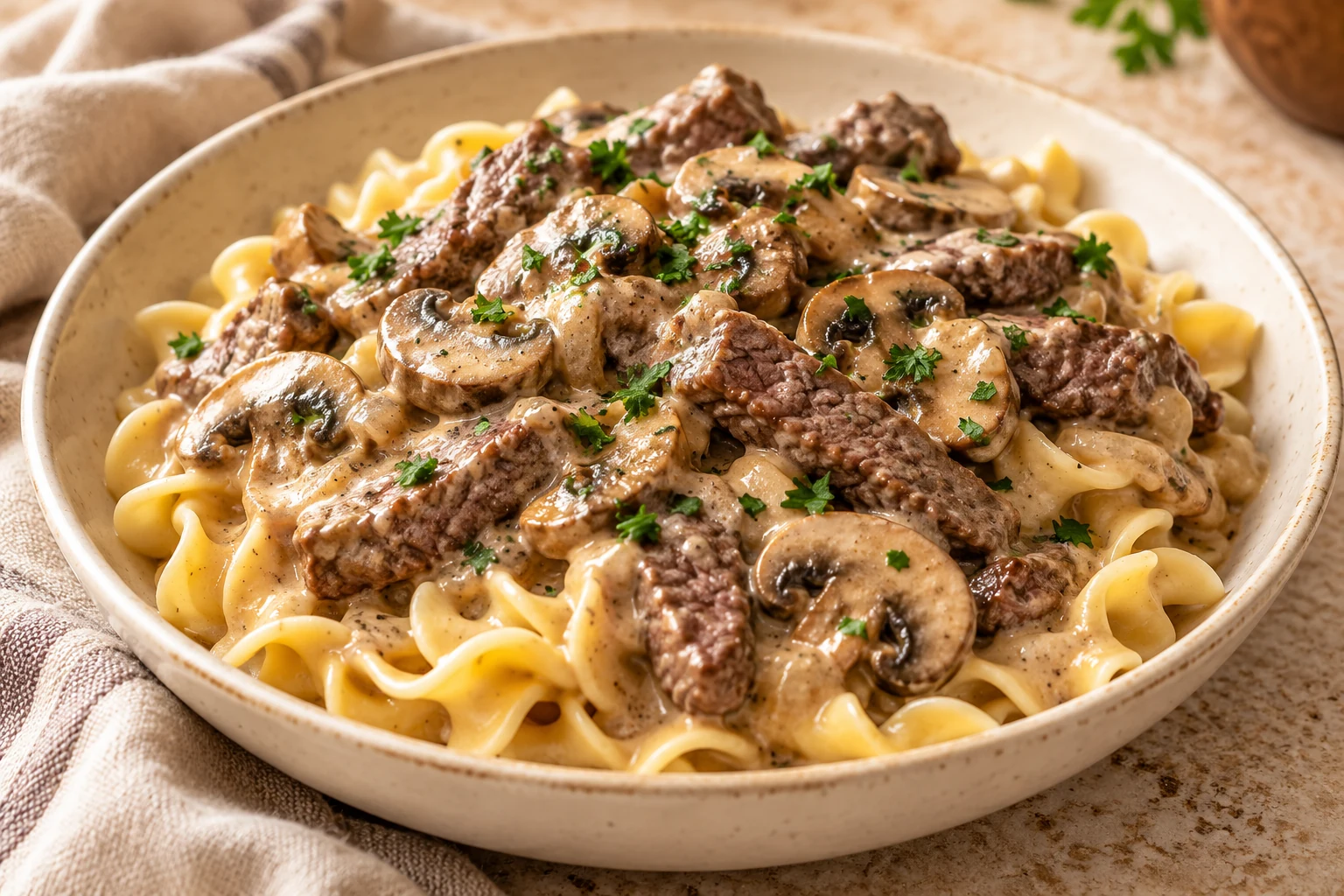
A comforting take on Russia’s beef stroganoff, with tender steak strips, mushrooms, and sour cream. Egg noodles catch every spoonful of sauce.
Save to your Saucey Space, or keep a bookmark on this device.
A NOTE FROM THE KITCHEN
Tender steak needs only a short cook.
Choose sirloin or ribeye rather than stewing beef for this quick method. Brown the strips separately, then bring them back to the mushroom sauce at the end. Warm the sour cream gently so the sauce stays smooth.
Ready to get started? The ingredients and steps are right below.
LET’S MAKE SOMETHING GOOD
Steak & mushroom stroganoff
Sample recipe awaiting kitchen testing. Timings are estimates.
The good part
Check off each step as you cook.
0 of 4 steps complete
BEHIND THE DISH · Russia · International adaptations
Steak & mushroom stroganoffBeyond the plate.
Tender beef and a tangy, creamy sauce have carried stroganoff far from nineteenth-century Russia. Its story brings together aristocratic naming, French and Russian cooking, expanding cookbook audiences, and the many changes a dish collects as it travels.
ORIGINS & EVOLUTION
The name is clearer than the inventor.
Beef stroganoff takes its name from the Stroganov family, but competing accounts attach it to different family members and cooks. The dish appears in editions of Elena Molokhovets’s household cookbook in the 1870s. That printed record provides a firmer anchor than stories about a count’s teeth or a frozen piece of meat.
French technique and Russian sour cream meet in its mustard-seasoned sauce, served together with small pieces of beef. Later versions changed the vegetables, seasoning, and accompaniments. Our steak-and-mushroom preparation belongs to that evolving family, with egg noodles included as the base.
CULTURAL IMPACT
A traveling name gathers variations.
Stroganoff became an international dish, with Russian emigration after the revolution contributing to its spread. The name remained recognizable even as cooks made adjustments. Mushrooms, tomato ingredients, different meats, and varied side dishes appear across its later life, making a single universal formula difficult to defend.
One established Russian presentation pairs the beef with thin fried potatoes. Our noodles catch the sauce differently, while retaining the combination of small pieces of tender meat and a creamy, gently sharp finish.
SOCIAL HISTORY
Print carried a grand name into kitchens.
The aristocratic name fits a nineteenth-century practice of naming dishes for prominent people. Wealthy Russian households employed French cooks, while ingredients such as sour cream gave their food a Russian character.
Cookbooks widened the audience for these preparations. In the later nineteenth century, large editions helped circulate recipes beyond the households whose names they carried. Stroganoff’s path into home cooking is therefore also a publishing story: a fashionable name could travel on a printed page and be adapted in another kitchen.
What else sounds good?
There’s a little more inspiration in the kitchen.
Back to the recipes