
Korean · Main course · SAMPLE RECIPE
Beef bulgogi
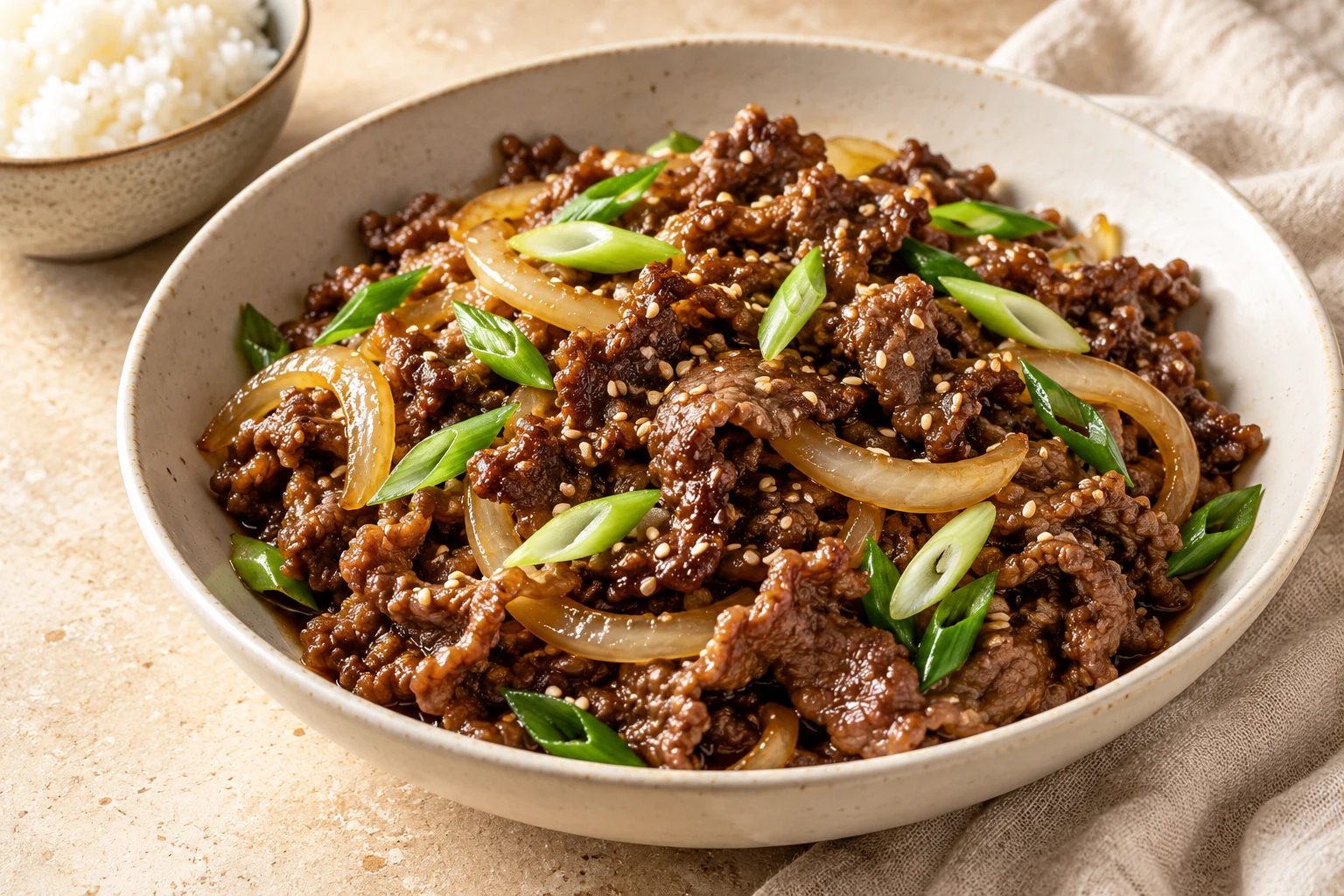
Korean marinated steak, sliced thin and quickly browned with onion. Pear, garlic, soy, and sesame give it a sweet-savory finish.
Save to your Saucey Space, or keep a bookmark on this device.
A NOTE FROM THE KITCHEN
Thin slices, small batches.
Ask for thinly sliced ribeye or sirloin, or slice cold steak across the grain yourself. This home skillet version uses grated pear in the marinade. Drain off excess liquid before cooking so the beef can brown rather than simmer.
Ready to get started? The ingredients and steps are right below.
LET’S MAKE SOMETHING GOOD
Beef bulgogi
Sample recipe awaiting kitchen testing. Timings are estimates.
The good part
Check off each step as you cook.
0 of 4 steps complete
BEHIND THE DISH · Korea
Beef bulgogiBeyond the plate.
Thin beef, a sweet-savory marinade, and the aroma of sesame make bulgogi familiar to many diners. Its history is also a story of changing restaurant meals, family occasions, and the many ways a national favorite can be cooked.
ORIGINS & EVOLUTION
A familiar name, a changing dish.
Bulgogi combines the Korean words for fire and meat. Its modern development is more complicated than that direct translation suggests. Research tracing twentieth-century cookbooks and newspapers connects it with neobiani, seasoned grilled beef, and finds the name bulgogi in print in the 1920s.
Over the following decades, the dish developed both grilled and broth-based forms. Seoul-style bulgogi can use a domed pan whose surrounding liquid collects the meat juices and cooks vegetables or noodles. Our skillet version follows the browned-beef approach, draining excess marinade and cooking in uncrowded batches.
CULTURAL IMPACT
A recipe with more than one life.
Bulgogi became an important part of Korea’s restaurant culture and one of its internationally recognizable foods. Its reach also appears in home cooking: cooked bulgogi can become a rice-bowl topping or a filling for gimbap, while contemporary cooks also tuck it into tacos and sandwiches.
Those new settings retain an identifiable combination of thin meat, sweetness, soy sauce, garlic, and sesame. Korean cooks also publish practical versions for ordinary stoves and backyard grills. The dish’s ability to travel includes this adjustment of equipment, as well as the invention of new ways to serve it.
SOCIAL HISTORY
From a banquet course to the shared main.
Restaurant memories give the changes a human scale. The owners of Seoul’s Hanilkwan recalled grilled bulgogi as one component of large celebration meals, including weddings and sixtieth birthdays. By the 1980s, smaller family groups increasingly ordered broth bulgogi as their main shared dish.
That account describes one restaurant’s experience, rather than a rule for every Korean household. It nevertheless shows how serving styles can respond to changing gatherings. At home, rice, lettuce leaves, and accompanying dishes offer another flexible arrangement, letting diners combine a little beef with other flavors throughout the meal.
What else sounds good?
There’s a little more inspiration in the kitchen.
Back to the recipes