
American · Main course · SAMPLE RECIPE
Beef & bean chili
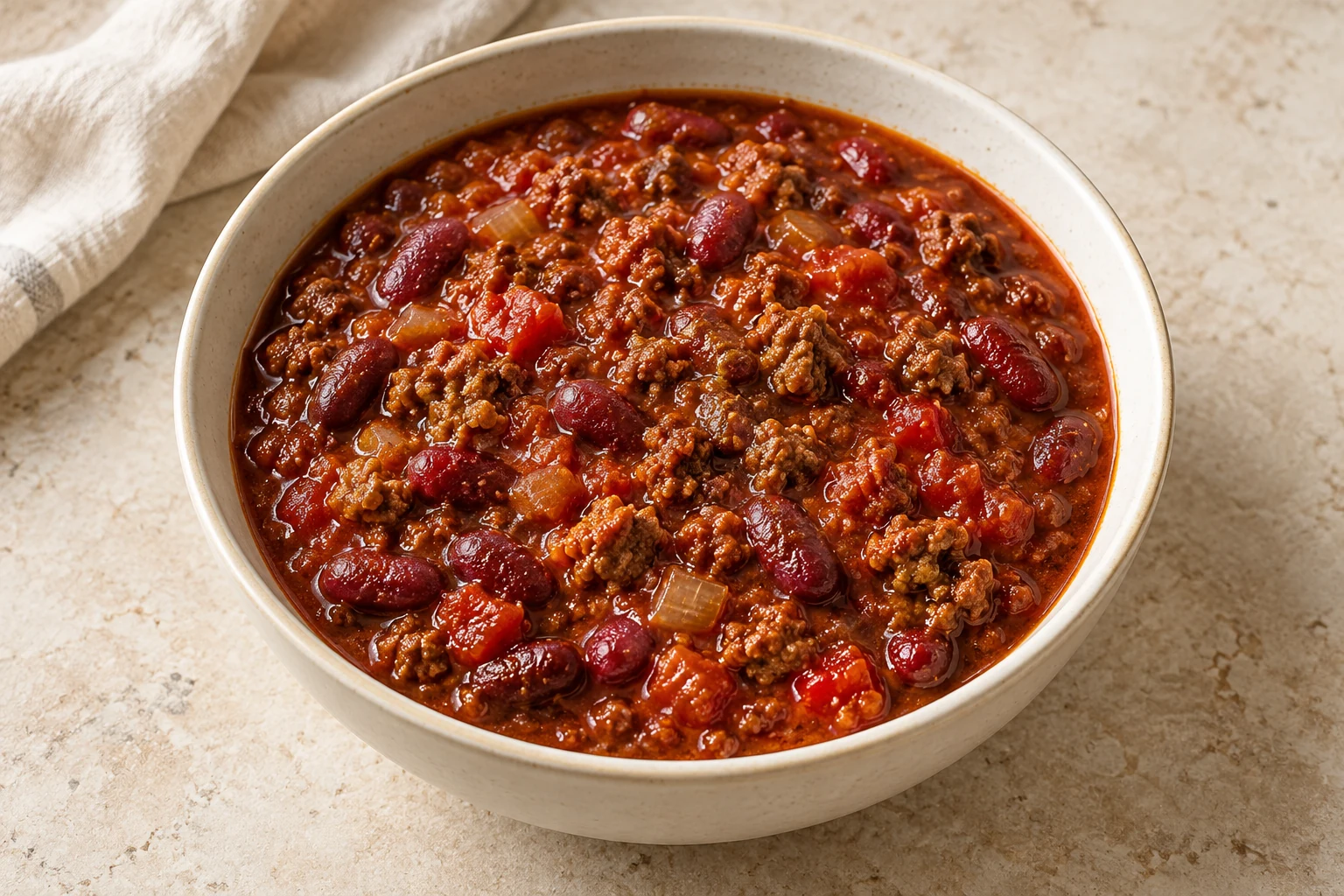
A hearty pot of ground beef, red kidney beans, tomatoes, and gently smoky spices, ready for spooning into deep bowls.
Save to your Saucey Space, or keep a bookmark on this device.
A NOTE FROM THE KITCHEN
Choose a chili spice blend.
This is a bean-filled American home-style chili, not a Texas-style bowl of red. Use a mild American chili powder blend containing ground chiles and spices; pure ground hot chile would make the same quantity much hotter. Canned kidney beans are already cooked.
Ready to get started? The ingredients and steps are right below.
LET’S MAKE SOMETHING GOOD
Beef & bean chili
Sample recipe awaiting kitchen testing. Timings are estimates.
The good part
Check off each step as you cook.
0 of 4 steps complete
BEHIND THE DISH · Texas borderlands & American home kitchens
Beef & bean chiliBeyond the plate.
A pot of chili can start an argument as quickly as it starts dinner. Behind the questions about beans and tomatoes lies a history of Mexican-American food sellers, regional pride, and practical home cooking.
ORIGINS & EVOLUTION
A clearer history than a single origin story.
Chili’s beginnings are disputed, and colorful stories about one inventor should be treated carefully. A firmer part of its history is San Antonio’s late nineteenth-century trade in chile con carne: meat cooked with chiles and sold alongside other Mexican dishes in the city’s public plazas.
The women remembered as the Chili Queens helped make those meals visible to residents and travelers. Their food belongs to a Mexican-American regional history that cannot be reduced to a generic cowboy campfire. Nor should their dishes be assumed to match every later American chili recipe.
CULTURAL IMPACT
A regional food becomes a symbol.
Commercial seasonings helped chili travel. German immigrant Willie Gebhardt developed a dried-chile powder business in Texas and distributed recipe pamphlets, giving more cooks a convenient route to flavors associated with Mexican cooking. Chili eventually became Texas’s official state dish in 1977.
Its popularity also produced many expectations about what belongs in the pot. Our ground-beef version includes kidney beans, tomatoes, and bell pepper. It is a bean-filled American home-style chili, rather than an attempt to settle the rules of a Texas bowl of red.
SOCIAL HISTORY
The women behind the evening meal.
The Chili Queens were businesswomen as well as cooks. They set up outdoor stands, served food into the night, and helped support their households. Tables, lanterns, music, and a mixture of local and visiting customers made the plazas places of sociability as well as commerce.
Their working conditions were vulnerable to changes in the city. Health regulation and closures disrupted the stands during the 1930s, and the older plaza trade had largely ended by the early 1940s. Remembering those vendors brings labor and public space back into a story often told mainly through ingredients.
What else sounds good?
There’s a little more inspiration in the kitchen.
Back to the recipes