American · Breakfast · SAMPLE RECIPE
Classic banana bread
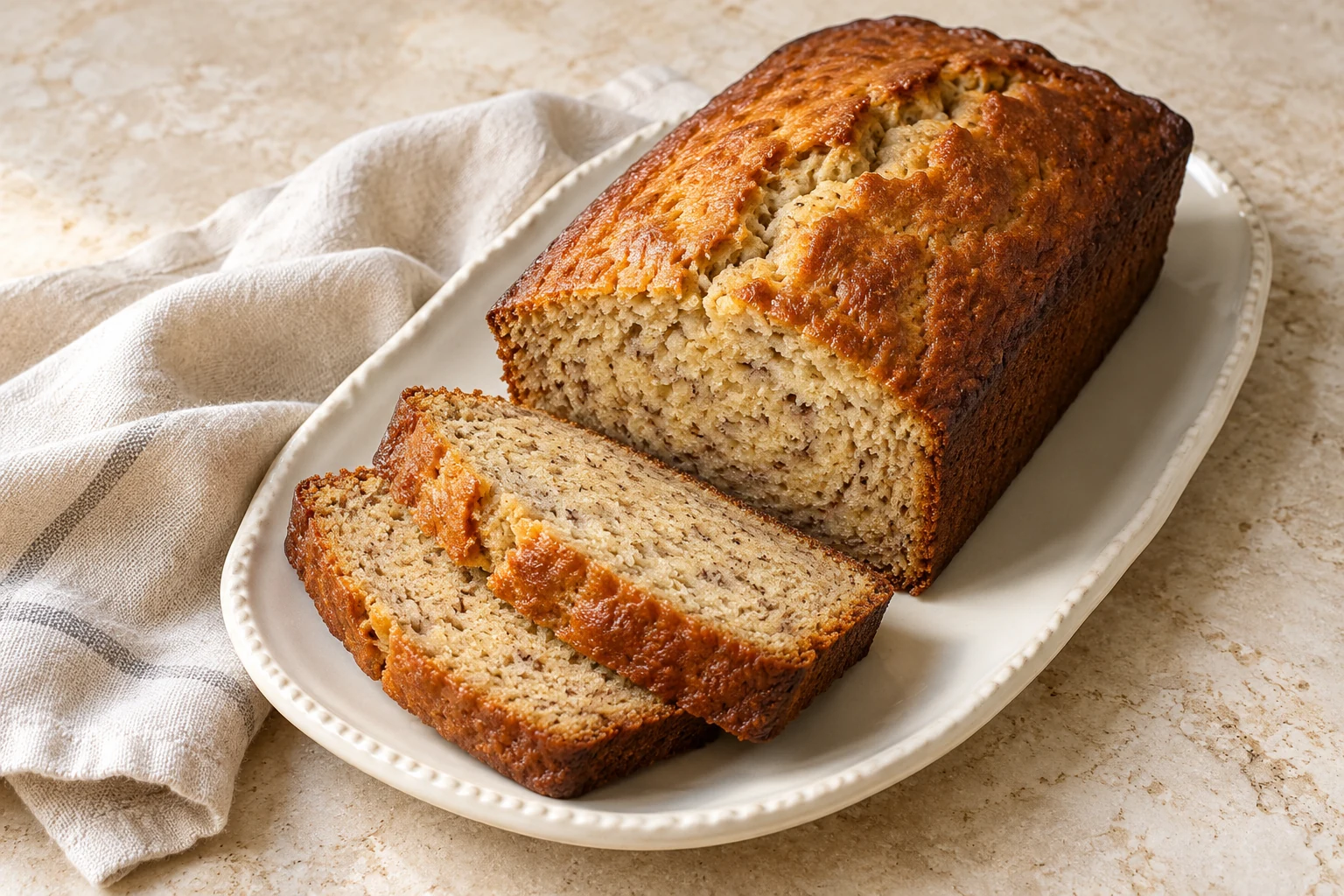
Ripe bananas, brown sugar, and a little yogurt make a fragrant, tender loaf that is just as welcome at breakfast as it is with an afternoon cup of tea.
Save to your Saucey Space, or keep a bookmark on this device.
A NOTE FROM THE KITCHEN
Measure the banana after mashing.
Bananas vary greatly in size. Measuring the mash keeps the loaf from becoming wet and heavy. Use very ripe fruit with plenty of brown spots; this version keeps the loaf plain, without nuts or chocolate. One loaf gives 10 generous slices.
Ready to get started? The ingredients and steps are right below.
LET’S MAKE SOMETHING GOOD
Classic banana bread
Sample recipe awaiting kitchen testing. Timings are estimates.
The good part
Check off each step as you cook.
0 of 4 steps complete
BEHIND THE DISH · United States
Classic banana breadBeyond the plate.
Banana bread turns soft fruit into something worth slicing and sharing. Its American story joins expanding fruit imports, twentieth-century recipe books, and the everyday calculation of what can still be made from a ripening ingredient.
ORIGINS & EVOLUTION
The fruit moves into the batter.
By the early 1930s, American cookbooks and commercial recipe collections were publishing banana breads with mashed fruit worked into the mixture. This is a quick bread: baking soda or powder provides the lift, so the loaf does not require a yeast-rising stage.
Depression-era thrift is a useful part of the story, but no single desperate cook needs to be credited with inventing the loaf. One 1930 recipe used wheat bran and comparatively little fat and sugar, showing how this flexible bake could reflect household budgets.
CULTURAL IMPACT
A familiar loaf keeps changing.
Later recipes give the same basic idea different personalities. A 1946 version used one egg and sour milk or buttermilk. The 1970s Moosewood version added an unusually aromatic mixture including coffee, orange, and nutmeg, with sesame seeds in the pan.
These variations show how a recognizable home bake can carry changing tastes without needing a new name. Banana bread can be plain or elaborate, but ripe fruit remains central. Our loaf uses brown sugar, yogurt, and a little cinnamon, without nuts or chocolate.
SOCIAL HISTORY
An everyday loaf needs an everyday fruit.
Bananas were not always a routine American purchase. Early nineteenth-century imports arrived irregularly in northeastern ports. Trade expanded dramatically toward the century’s end, bringing fruit grown far from American kitchens into a much wider market.
That growing familiarity had a public voice: a proposed American banana import duty met consumer resistance in 1913 and was shelved. The episode predates banana bread’s cookbook popularity, but helps explain its setting. A household could only have spare ripe bananas once buying bananas had become ordinary.
What else sounds good?
There’s a little more inspiration in the kitchen.
Back to the recipes