
American · Main course · SAMPLE RECIPE
Baked macaroni & cheese
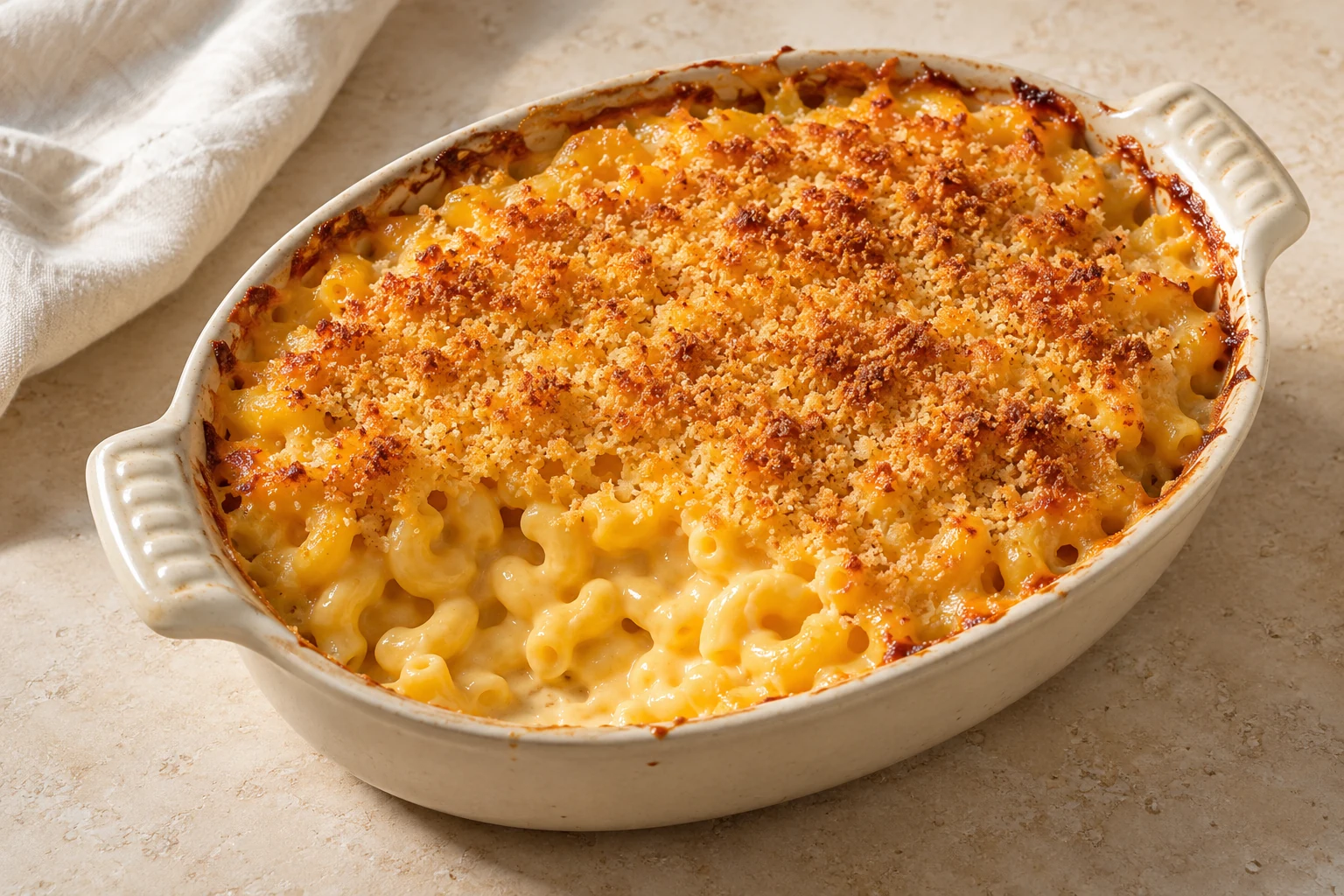
Elbow macaroni in a smooth cheddar and Gruyère sauce, finished with a thin, golden breadcrumb crust.
Save to your Saucey Space, or keep a bookmark on this device.
A NOTE FROM THE KITCHEN
Leave room for the oven.
The pasta finishes cooking in its cheese sauce, so drain it while it is still slightly firm. This is a generous main-course portion for six or a smaller side for more people. Grating cheese from a block usually gives a smoother sauce than pre-shredded cheese.
Ready to get started? The ingredients and steps are right below.
LET’S MAKE SOMETHING GOOD
Baked macaroni & cheese
Sample recipe awaiting kitchen testing. Timings are estimates.
The good part
Check off each step as you cook.
0 of 4 steps complete
BEHIND THE DISH · Europe, the United States & the Caribbean
Baked macaroni & cheeseBeyond the plate.
Under its golden top, macaroni and cheese holds several histories at once: European cookbooks, the skilled labor of enslaved cooks, and the place of baked pasta in African American and Caribbean food traditions.
ORIGINS & EVOLUTION
Older than the presidential legend.
Pasta baked with cheese was familiar in France before Thomas Jefferson arrived there in 1784. Neither Jefferson nor his enslaved chef James Hemings invented macaroni and cheese. Their connection is part of its American story, not the beginning of the dish itself.
Hemings trained in French kitchens and likely learned the preparation there, later helping introduce it to more American diners. A macaroni dish appeared at a presidential dinner in 1802, and Mary Randolph’s 1824 cookbook recorded a version. Those references reveal a developing repertoire, rather than one definitive recipe.
CULTURAL IMPACT
A dish claimed through everyday affection.
Macaroni and cheese has a significant place in African American food culture and in Caribbean cooking, where baked versions may be called macaroni pie. These connections matter alongside its European background: a dish’s cultural home can be shaped by generations of cooking and eating it.
Printed community cookbooks offer another view of that affection. Collections assembled by civic and church groups include macaroni dishes among foods meant to feed others. A pan that can be portioned at the table is well suited to this kind of shared meal.
SOCIAL HISTORY
Remembering the cook as well as the host.
Hemings cooked for influential guests while enslaved by Jefferson. He secured his freedom in 1796 after training his brother Peter as his replacement. His story makes an essential distinction: the public fame of a dining table does not automatically tell us who supplied its expertise and labor.
Later manufacturing changed the dish’s practical setting. Factory-made pasta and boxed macaroni dinners made quicker versions widely available. Our baked recipe follows a different home method: a flour-thickened milk sauce, cheddar and Gruyère, and a breadcrumb finish, with the oven giving the top its contrasting texture.
What else sounds good?
There’s a little more inspiration in the kitchen.
Back to the recipes