
Portuguese · Main course · SAMPLE RECIPE
Arroz de pato · baked duck rice
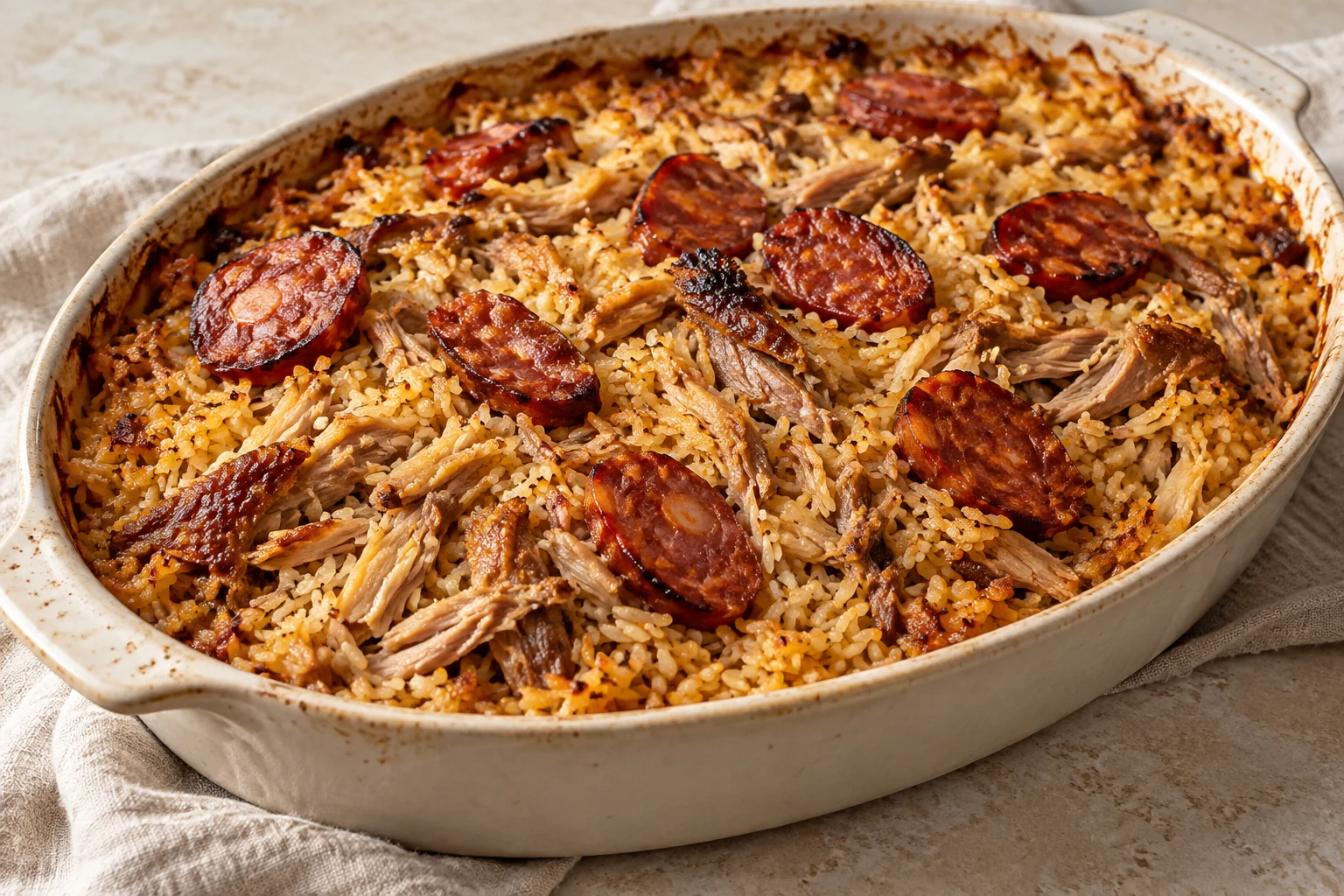
Tender shredded duck and rice cooked in its savory broth, finished in the oven with smoky chouriço. The browned top gives way to a comforting, richly flavored center.
Save to your Saucey Space, or keep a bookmark on this device.
A NOTE FROM THE KITCHEN
The duck makes the broth for the rice.
This home version uses duck legs rather than a whole bird and a fully cooked Portuguese-style chouriço. Read the sausage label; not every cured sausage is ready to eat. The timing includes simmering the duck, preparing the rice, and the final bake.
Ready to get started? The ingredients and steps are right below.
LET’S MAKE SOMETHING GOOD
Arroz de pato · baked duck rice
Sample recipe awaiting kitchen testing. Timings are estimates.
The good part
Check off each step as you cook.
0 of 5 steps complete
BEHIND THE DISH · Portuguese baked rice dishes
Arroz de pato · baked duck riceBeyond the plate.
Duck seasons the cooking liquid before its meat returns to the rice for an oven finish.
ORIGINS & EVOLUTION
The broth connects the dish.
Arroz de pato is a Portuguese duck-and-rice preparation with many household versions. The duck is commonly simmered first, making a broth used to cook the rice. Shredded meat and rice are then brought together, often with chouriço and a browned finish from the oven.
CULTURAL CONTEXT
A dish made for sharing.
A shallow baking dish makes arroz de pato easy to bring to a family table. The top and edges become drier than the rice beneath, giving each serving a little contrast. Sausage contributes seasoning without replacing the duck as the central flavor.
AT THE TABLE
Duck legs and a measured broth.
Our version uses legs rather than a whole bird, discards the skin and bones, and skims excess fat from the broth. Fully cooked chouriço goes into the rice and over the top. The measured liquid and shallow dish help the home cook control the final texture.
What else sounds good?
There’s a little more inspiration in the kitchen.
Back to the recipes