
Mexican · Drinks · SAMPLE RECIPE
Agua de jamaica
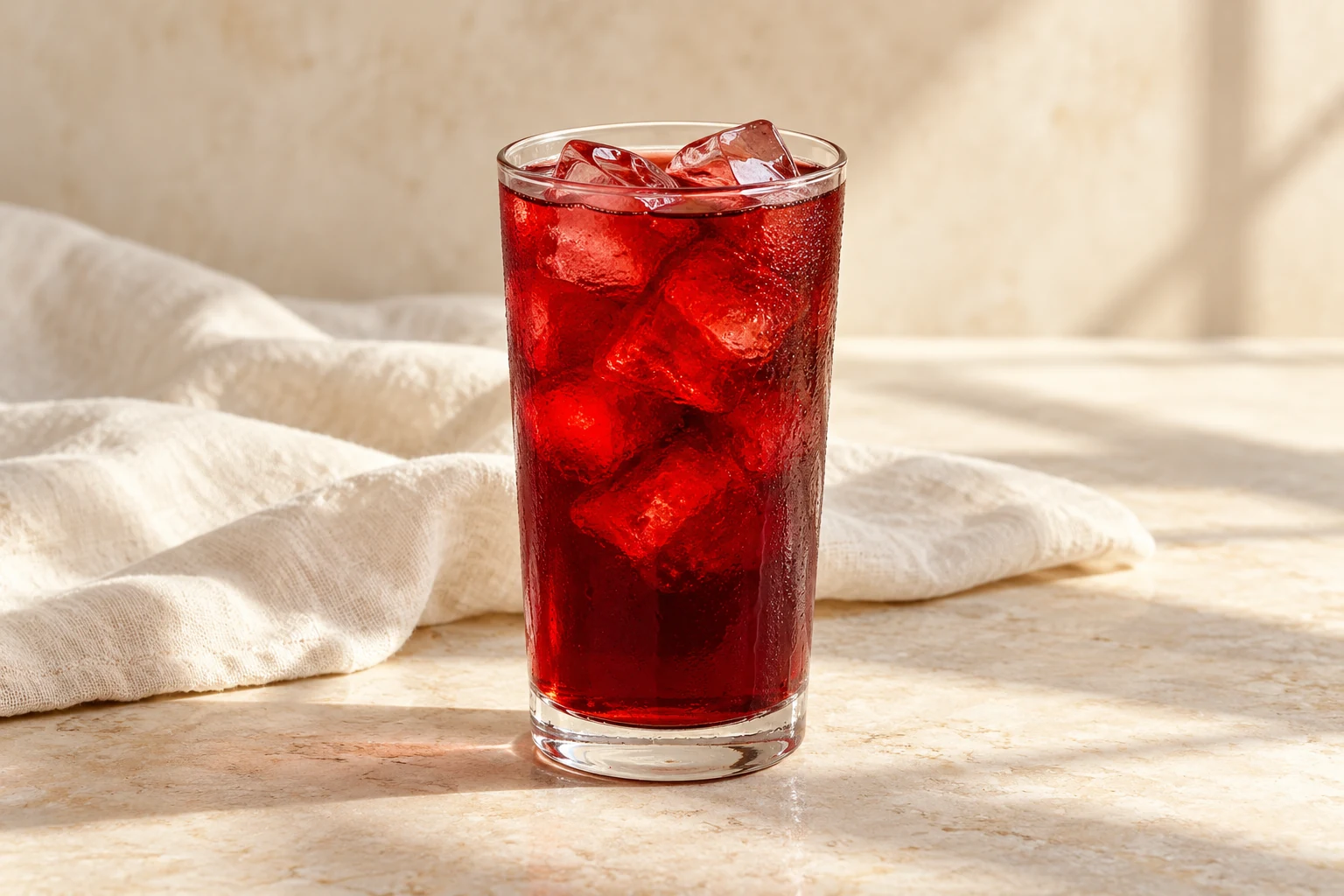
Deep ruby hibiscus water with a bright tart edge, a little sugar, and plenty of cooling ice.
Save to your Saucey Space, or keep a bookmark on this device.
A NOTE FROM THE KITCHEN
A ruby infusion, ready for ice.
Look for food-grade dried hibiscus labeled flor de jamaica or roselle. The dried red pieces are the fleshy calyces of the plant. This version uses just hibiscus, water, and sugar and makes about 4 cups before ice.
Ready to get started? The ingredients and steps are right below.
LET’S MAKE SOMETHING GOOD
Agua de jamaica
Sample recipe awaiting kitchen testing. Timings are estimates.
The good part
Check off each step as you cook.
0 of 4 steps complete
BEHIND THE DISH · Mexico, within a wider roselle-drink tradition
Agua de jamaicaBeyond the plate.
Agua de jamaica is recognizable in a Mexican meal: ruby red, tart, and served cold. Behind that glass is a tropical crop with wider geographic roots and a preparation connecting growers, household cooks, and everyday hospitality.
ORIGINS & EVOLUTION
A tropical plant takes root in many kitchens.
Roselle, commonly known botanically as Hibiscus sabdariffa, most probably originated in Africa. Plant histories trace its introduction into the Americas and India in the seventeenth century; a first Mexican serving is not established. The crop now grows across tropical regions.
The dried red pieces sold as flor de jamaica are principally the fleshy calyces surrounding the seed capsule. They can be stored and later infused in water. This makes the drink different from an agua fresca based on blending fresh fruit, even though both belong at the same table.
CULTURAL IMPACT
One ingredient, several drink traditions.
Roselle’s sour calyces are also used for beverages outside Mexico, including the familiar tart infusion served in Egypt. The shared plant is a link between these preparations, rather than proof that every version has the same seasoning, occasion, or route of arrival.
Within Mexico, jamaica sits beside horchata and tamarind as a familiar agua fresca choice. Those flavors accompany antojitos and regular meals in cool weather as well as summer. The preference for a red glass or a creamy white one has even become a friendly way to declare a favorite.
SOCIAL HISTORY
The pitcher begins in a field.
Mexican growers cultivate jamaica largely with seasonal rainfall. A grower account describes planting in July and harvesting in December, with the crop sometimes interplanted with maize. Those details place the bright drink within an agricultural calendar and a working landscape, rather than only on a restaurant menu.
Jamaica also belongs to Texas Mexican cooking, where it appears among traditional aguas frescas prepared for warm days. Our plain infusion follows that practical idea: brew, strain, sweeten, and chill. Preparing a pitcher ahead lets one short kitchen task supply several glasses at the table.
What else sounds good?
There’s a little more inspiration in the kitchen.
Back to the recipes